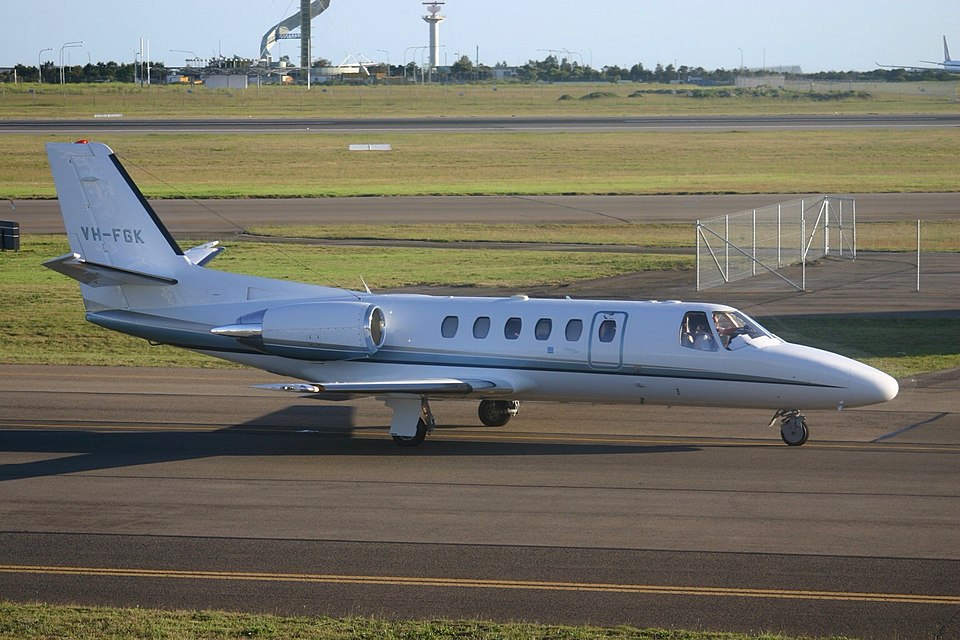
Incident Overview
On the morning of 25 September 2015, the captain and copilot of a Cessna 550 aircraft (Citation Bravo), registered VH-FGK, prepared to conduct a private flight from Lismore Airport to Baryulgil, about 40 nautical miles south-west of Lismore, New South Wales. The aircraft had been parked at the northern end of the airport overnight, with engine covers and control locks installed.
Pre-flight and Taxi
After arriving at the airport, the flight crew performed a pre-flight inspection and identified no abnormalities. They then commenced the normal pre-start checks, which included disengaging the flight control locks. The crew elected to use runway 15 for take-off and used the Cessna simplified take-off performance criteria to determine thrust settings and take-off reference speeds. The resultant speeds were 105 knots for decision speed (V1) and 108 knots for rotation speed (VR). At about 1300 Eastern Standard Time, the crew started the engines and performed associated checks, all indications normal. The after-start checks were completed, and the captain taxied the aircraft to the holding point for runway 15, less than 200 metres from the parking spot.
Take-off Attempt
While stopped at the holding point, the crew completed the taxi and pre-take-off checks. The copilot broadcast standard calls on the common traffic advisory frequency, and the captain communicated with air traffic control. The captain taxied onto the runway and turned left onto the centreline to commence the take-off run from the intersection. During the roll, the captain advanced the thrust levers to the approximate take-off setting, then called 'set thrust', and the copilot set the levers to the precise position for planned engine thrust. As the aircraft accelerated, the copilot called '80 knots' and crosschecked that both airspeed indicators agreed. The copilot called 'V1', and the captain moved their hands from the thrust levers to the control column per normal procedure. A few seconds later, the copilot called 'rotate', and the captain initiated a normal rotation action on the control column.
Failure to Rotate and Rejected Take-off
The crew reported that the aircraft did not rotate, and they felt no indication that it would lift off. The copilot looked outside and detected no change in attitude as normally expected. The captain stated to the copilot that the aircraft would not rotate and pulled back harder on the control column. The copilot saw the captain had pulled the column firmly into their stomach. Although the aircraft's speed was then about 112 knots, above VR, the crew did not detect any movement of the attitude director indicator or nose wheel lifting off the ground. The captain rejected the take-off: applied full brakes, set the thrust levers to idle, then into reverse thrust.
Overrun and Damage
The aircraft continued to the end of the sealed runway and onto the grass in the runway end safety area (RESA), coming to rest slightly left of the extended centreline, about 100 metres beyond the runway end. The aircraft sustained substantial damage. The flight crew, the only occupants, were uninjured. The nose landing gear separated during the overrun, and there was significant structural damage to the fuselage and wings. The right wheel tyre had deflated due to an apparent wheel lockup and flat spot, which progressed to a large hole worn in the tyre.
Probable Cause
The official investigation identified the following contributing factors:
- There was probably residual braking pressure in the wheel brakes during the take-off run.
- The aircraft’s parking brake was probably applied while at the holding point and not disengaged before taxiing onto the runway for take-off.
- The Citation aircraft did not have an annunciator light to show that the parking brake is engaged, and the manufacturer’s before take-off checklist did not include a check to ensure the parking brake is disengaged.
- The aircraft experienced a retarded acceleration during the take-off run, and did not rotate as normal when the appropriate rotate speed was reached, resulting in a critical rejected take-off and a runway overrun.