Flight Details
A Cessna Citation 550 was being repositioned for an air ambulance flight. During approach to a 4,801-foot grooved asphalt runway, the copilot was manually flying. The copilot reported a target landing approach speed (Vref) of 106 knots. The pilot-in-command (PIC) estimated the airplane broke out of clouds about two miles from the runway. Both pilots stated that the airplane continued descending on the glide slope and localizer. Neither pilot could recall the exact touchdown point or speed at touchdown.
Witness Observations
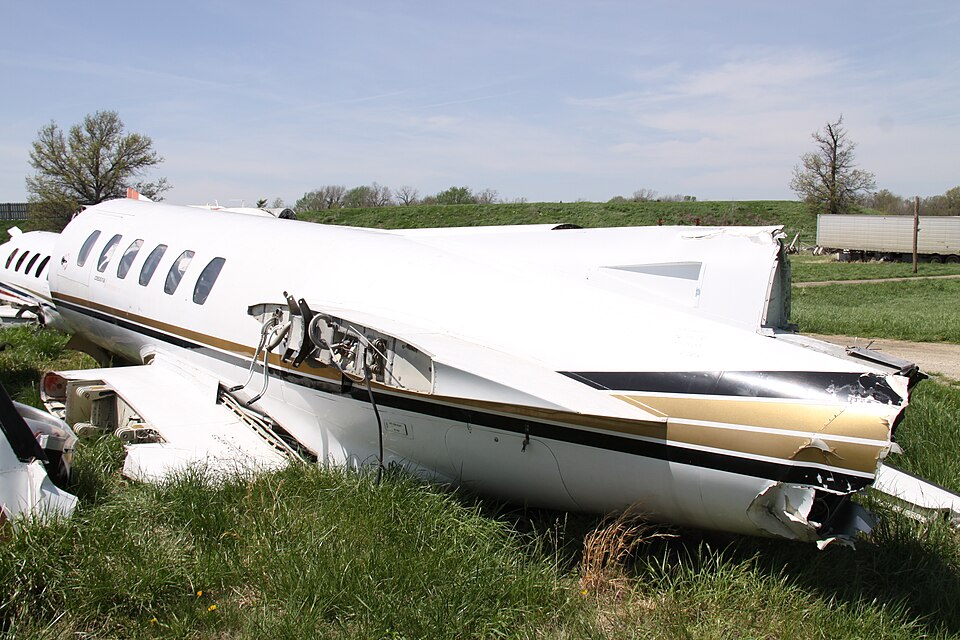
Witnesses observed the airplane crossing the runway threshold "high and fast." The airplane touched down about halfway down the runway and continued off the departure end, striking a wooden localizer antenna platform and the airport perimeter fence. It then crossed a road and came to rest approximately 400 feet from the runway end.
Data Analysis
Data from the Enhanced Ground Proximity Warning System (EGPWS) showed that the airplane's groundspeed at touchdown was about 140 knots. A review of the cockpit voice recorder suggested that the PIC did not activate the speed brake upon touchdown. Braking action was estimated as "fair" with approximately 1/4 to 1/2 inches of loose, fluffy snow on the runway. The PIC reported that he thought the runway might be covered with one to two inches of snow, which did not concern him. The copilot reported encountering light snow during the approach. No mechanical failures or system malfunctions were identified by the pilots or during post-accident examinations.
Performance Considerations
According to the airplane flight manual, the applicable conditions prescribed a Vref of 110 knots. For an uncontaminated runway, the required landing distance was about 2,740 feet. On a runway contaminated with 1 inch of snow, the required landing distance at Vref 110 knots was approximately 5,800 feet. At Vref plus 10 knots (similar to the actual groundspeed), the required landing distance increased to about 7,750 feet.
Probable Cause
The copilot's failure to maintain the proper airspeed, and failure to obtain the proper touchdown point, and the pilot-in-command's inadequate supervision, which resulted in an overrun. Contributing to the accident was the PIC's failure to activate the speed brake upon touchdown and the snow contaminated runway.