Accident Overview
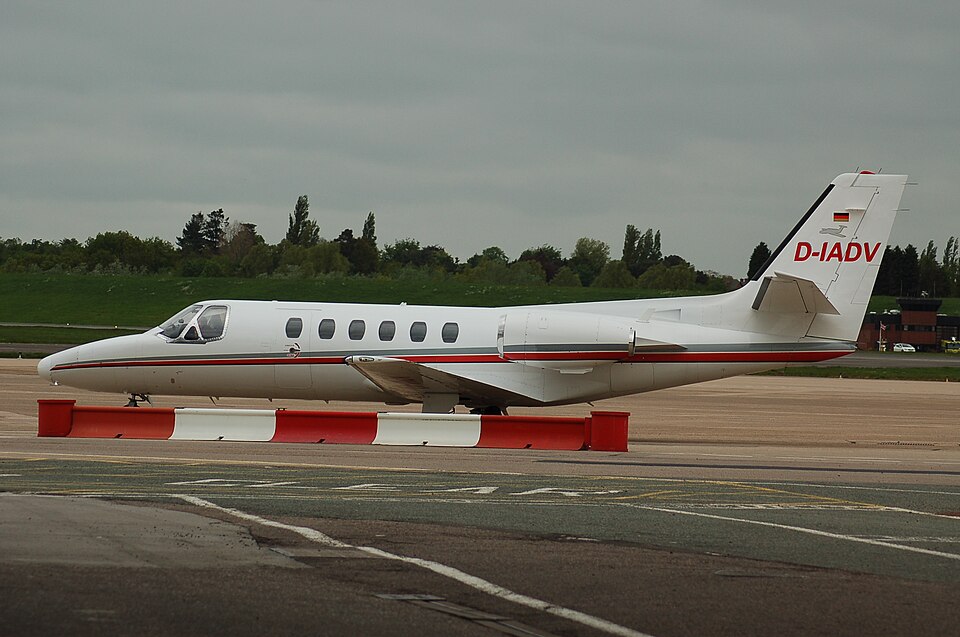
On a training flight from Reichelsheim Airfield, a Cessna 551 Citation II/SP corporate jet was conducting a type-rating training session at Siegerland Airport. The aircraft, occupied by a pilot-in-command serving as flight instructor and a student pilot as co-pilot, completed three ILS approaches to runway 31 before the tower changed the landing direction to runway 13 due to shifting wind conditions. The crew taxied to the end of runway 13, took off at 14:34 local time, and initiated a left-hand circuit at 3,500 ft AMSL under visual flight conditions. Both pilots reported that checklists were completed and the aircraft was configured for landing on runway 13.
Final Approach and Touchdown
During the final approach, the copilot (pilot flying) noted a decrease in speed, the aircraft flying too low, and a need to correct the approach angle. He pushed the thrust levers to their forward stop; the instructor also pushed them forward. However, the instructor stated that insufficient time remained for the engines to accelerate to maximum thrust before touchdown. He added that the aircraft was in the stall area but no stall warning had been observed. At 14:42, with landing gear extended, the aircraft touched down in the grass ahead of the asphalt of runway 13. The left main landing gear buckled, damaging the left wing tank, and the right main landing gear also buckled, though the right tank remained intact. Escaping kerosene from the left wing ignited, causing a fire. The aircraft slid along runway 13 on the collapsed landing gear, underside of the airframe, and extended flaps, coming to a stop approximately 730 m from the runway threshold.
Aftermath
The copilot observed flames on the left side after the aircraft stopped. The instructor shut down both engines, and both pilots exited through the right-side emergency exit door. Neither pilot was injured.
Investigation Findings
The official determination attributed the accident to an unstabilized approach and failure to initiate a go-around. Contributory factors included a traffic pattern organized too close to the airport, a final approach that was too short and unstabilized, incorrect maintenance of the approach angle until the runway threshold, excessive speed reduction, delayed recognition of speed loss and insufficient engine power increase by both pilots, late intervention by the flight instructor, and ascending terrain ahead of the runway threshold. It was considered highly likely that the student pilot perceived being too high and deliberately maintained a shallow approach angle.