Introduction
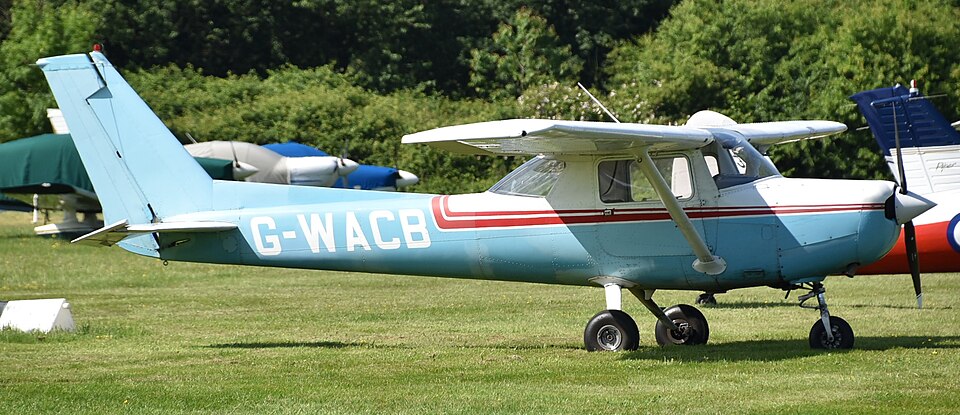
On 16 October 2002, a Cessna F152 (registration G-WACB) sustained damage to its nose landing gear during a landing at Wycombe Air Park in Marlow. The aircraft, manufactured in 1986, was powered by a single Lycoming O-235-N2C piston engine. The private flight was operated by a student pilot holding a Student Pilot licence.
Aircraft and Crew
The commander, aged 44, had accumulated 23 hours of total flying experience, all on the Cessna F152 type. In the 90 days preceding the incident, he had flown 14 hours, with 4 hours in the last 28 days. The flight was his first solo circuit, and no passengers were on board. The pilot reported no injuries.
Flight Details
The weather at the time of the incident was reported as good, with wind from 350 degrees at 9 knots, visibility exceeding 10 kilometres, and no significant weather phenomena. The pilot conducted a normal approach with land flap extended to Runway 35, which has a grass surface. During the landing, the aircraft bounced, but the student pilot did not initiate recovery action or a go-around. The aircraft subsequently contacted the ground nose-first, causing the nose landing gear to break off.
Damage
Examination after the event revealed that the nose landing gear had separated from the aircraft. No other damage was reported.
Prior Training
Before this solo flight, the student had completed four circuits with an instructor on the same runway. These circuits included a go-around from a low height, and the instructor reported that all were of an acceptable standard.