History of the Flight
The aircraft was flown to a maintenance organisation for rectification of a landing gear retraction problem. Twenty-three days prior, the landing gear had failed to retract fully on two occasions after takeoff, but recycled successfully. Fifteen days before the accident, the gear would not retract fully and the fault persisted after recycling. On the day of the accident, the aircraft was flown with the landing gear extended and the electric circuit breaker for the hydraulic pump pulled.
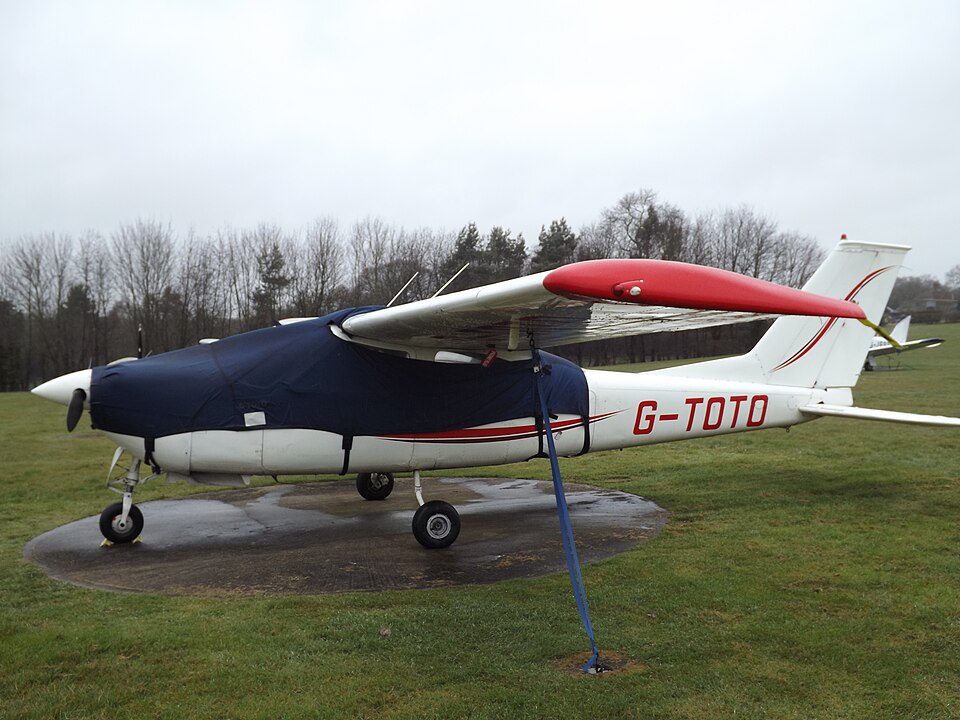
The flight to the grass airfield was uneventful. After positioning on downwind, the pilot selected 10° of flap, checked the landing gear down-and-locked green light, and reduced speed to 95 mph. On base leg, flap was increased to 20° and speed reduced to 90 mph. On final approach, speed was reduced to 75 mph with 30° flap selected, and the flare was executed at 65 mph. The pilot assessed the touchdown as very smooth and held the nose wheel off as long as possible. As the aircraft decelerated, the nose dropped and the propeller struck the ground. The pilot immediately pulled the fuel mixture to idle cut-off, switched off electrical power, and shut off the fuel. He vacated the aircraft via the pilot's door.
Engineering Examination
Post-accident examination found no pre-accident major failure of the nose landing gear system; adequate hydraulic fluid was present, and the hydraulic pump circuit breaker was out. The aircraft underwent extensive repairs, during which a detailed landing gear inspection was conducted.
The nose landing gear overcentre downlock was considerably out of adjustment, rendering the breakout force virtually non-existent. This condition had existed for some time. With the aircraft on jacks and gear extended, unsuccessful attempts were made to unlock the nose gear.
The left main landing gear downlock latch pivot pin had failed due to a double fatigue mechanism that occurred over many cycles. This failure would have disrupted the left main gear downlock microswitch or its sequence switch. The right main gear downlock latch pivot pin was at the point of final failure from an almost identical double fatigue mechanism.
Previous Similar Failures
In 1993, another UK Cessna 177RG experienced partial gear retraction after takeoff. Recycling resolved the issue temporarily, but the problem recurred. The gear was extended normally and landed without incident. Examination revealed a main gear downlock latch pivot pin failed in double fatigue.
Manufacturer's Modifications
Cessna has issued Service Kits SK177-21A, SK177-22A, and SK177-21D to allow owners to upgrade the main landing gear downlock mechanisms.