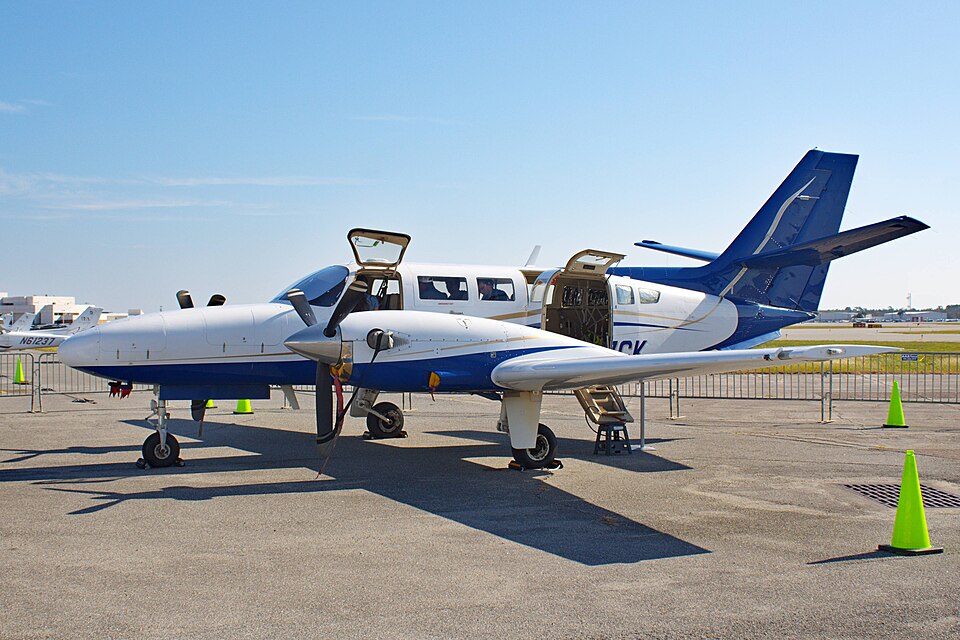
Accident Overview
On 8 November 2008 at 1313 UTC, a Cessna F406 Caravan II (registration N17CK) landed on Runway 07 at Terrance Lettsome Airport, Tortola, British Virgin Islands, with the landing gear in the retracted position. The aircraft was completing a VFR flight from St Thomas Airport, US Virgin Islands. The pilot, the sole occupant, was not injured.
Flight and Landing
The pilot reported that he commenced the approach, selected the landing gear lever to the DOWN position, and deployed the flaps. Shortly after touching down, he felt and heard the propellers strike the runway. He immediately cut the power and raised the nose of the aircraft as much as possible. The aircraft slid a short distance before coming to rest on its underside. The pilot selected all switches to OFF and vacated the aircraft.
Post-Accident Examination
The airport Fire and Rescue Service attended quickly, saw fluid leaking from both engines, and advised the pilot to turn off the switches. After the pilot vacated, a foam blanket was laid around the aircraft. A local mechanic disconnected the battery. The aircraft was lifted with a mobile crane and strops, allowing the mechanic to lower the landing gear using the alternative blow-down procedure. The gear lowered and locked without fault, and the three green indicators illuminated. The aircraft was then towed to a hangar.
An Airworthiness Surveyor conducted a detailed inspection. No damage was found to any of the landing gear doors. The inboard flaps had sustained damage to their inboard rear corners and appeared retracted. In the cockpit, the landing gear lever was at DOWN and the flap lever at RETRACT. The landing gear configuration warning horn was tested and sounded normally.
System Testing
Both the landing gear and flap systems were function tested and operated normally with correct indications. The flaps were operated after removing a damaged guide roller; they cycled normally. The landing gear was cycled up and down twice without issue. The warning horn sounded as expected when tested. The pilot did not report hearing the warning horn during the approach or landing. Given the aircraft configuration, the horn would have only sounded when the power levers were retarded to IDLE after the propellers struck the runway, by which time the pilot's attention was likely occupied.
Aircraft Documentation and Condition
An inspection of aircraft log books revealed compliance with the maintenance cycle, though an unusual amount of rectification work was performed on 1 and 27 September 2008. The operator used log pages to cover multiple days of flights, and did not record fuel amounts or trend monitoring information. The pilot's abbreviated checklist manual was in poor condition and illegible on several pages. The pilot's operating handbook was held together with elastic bands and missing pages from the weight and balance section. No weight and balance schedule was found among recovered documents. The cabin and cockpit were in poor condition, with unsecured safety equipment, crew seat belt defects, and general trim defects.
Conclusion
No faults were found with the operation or indication of the landing gear and flap systems when tested after the accident. It is therefore possible that the aircraft was landed with the landing gear inadvertently left in the retracted position.