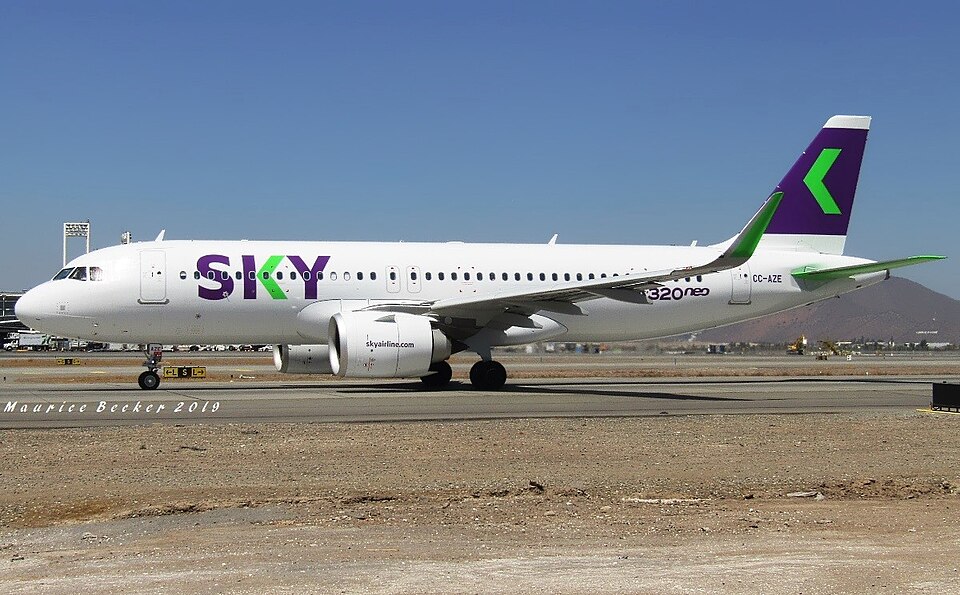
Flight Details
On March 26, 2021, at 19:55 local time, an Airbus A320-251N, registration CC-AZE, operated by Sky Airline Peru S.A.C., departed from Alfredo Rodríguez Ballón International Airport (SPQU) in Arequipa on scheduled flight SKX5142 to Jorge Chávez International Airport (SPJC) in Lima. The captain served as pilot monitoring (PM) and the first officer as pilot flying (PF).
Hydraulic Failure and Crew Actions
During the initial climb, at 19:56, the crew observed a gradual decrease in the hydraulic fluid level of the Yellow system reservoir. The Yellow system independently powers the nose wheel steering, parking and alternate brakes, engine #2 reverse thrust, yaw damper #2, and cargo doors. During cruise, approximately 40 nautical miles from Pisco Airport, a master warning activated with ECAM messages indicating low reservoir level (HYD Y RSVR LO LVL) and low pressure (HYD Y SYS LO PR). The crew followed the abnormal procedures from the FCOM for hydraulic system failures.
Emergency Declaration and Landing
The crew informed Lima Control of the failure, requested priority for approach, and indicated the need for towing due to the nature of the malfunction. At 21:09 local time, the aircraft landed safely on runway 15 at Lima, came to a stop on taxiway C, and the crew activated the brake fan and shut down the engines. The aircraft was then towed to parking position 7. All passengers and crew disembarked without incident.
Post-Flight Inspection and Damage
During a post-flight inspection, maintenance personnel discovered that tire #2 of the left main landing gear had lost tread material (stripped rib). Hydraulic fluid was found leaking from a rigid return line in the left main landing gear well. Additionally, damage consistent with foreign object impact was observed on the inner flap and lower left wing panel.
Probable Cause
The investigation determined the probable cause was a total loss of Yellow hydraulic fluid due to a crack in the return line located in the left main landing gear well. The crack was caused by impact from rubber debris that detached from the tread of tire #2 on the left main landing gear during takeoff from Arequipa.