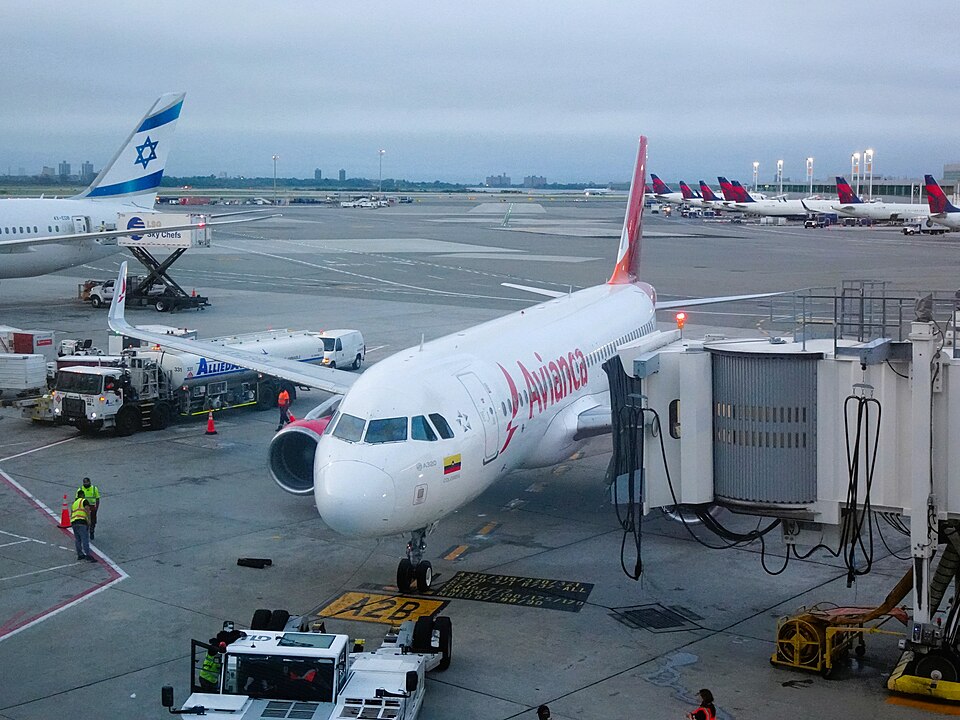
Flight History
The flight, operated as AVA9752, departed Bogotá's El Dorado International Airport at 23:30 UTC on 9 November 2024, bound for Cartagena's Rafael Núñez International Airport. The aircraft carried 174 passengers and 6 crew. Initial fuel onboard was 5,578 kg, with Ernesto Cortissoz Airport in Barranquilla designated as the alternate.
During the flight, air traffic control advised the crew to expect an approach for runway 19. Due to two successive medical emergencies involving other aircraft, traffic flow was affected. Adverse weather conditions at both the destination and the alternate necessitated a diversion to Los Garzones Airport in Montería.
Fuel Emergency
While diverting, the fuel level dropped to a critical point. The crew declared an emergency (MAYDAY) at 01:02 UTC. The aircraft executed an emergency landing with 755 kg of fuel remaining—354 kg below the planned final reserve of 1,109 kg.
Investigation Findings
The investigation determined that the serious incident resulted from the inability to land at the destination or the available alternate, compounded by a planned runway change, adverse weather, and high converging traffic with priority. Contributing factors included flight planning that lacked sufficient margin for prolonged delays, contingency fuel of 191 kg and extra fuel of 321 kg (totaling approximately 14 minutes) that proved insufficient, a prioritization of fuel-efficient approaches without full consideration of operational risks, and weaknesses in dispatch procedures regarding weather analysis and alternative scenario planning.