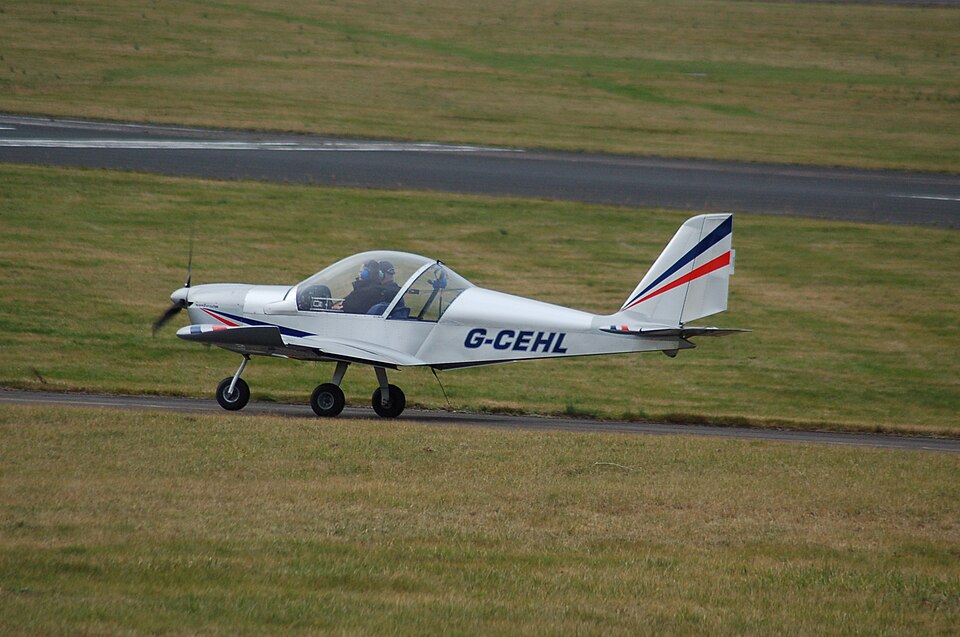
Accident Details
On 9 August 2013 at 1224 UTC, a Cosmik Aviation EV-97 Eurostar (registration G-CEHL, serial number 2928, manufactured 2006) operated by a training organization was conducting a solo training flight from Gloucestershire Airport. The aircraft, powered by one Rotax 912-UL piston engine, had a lone student pilot on board. No passengers were present. The pilot, aged 64, held a student pilot license and had 46 hours of flying experience, all on the type, with 9 hours in the last 90 days and 3 hours in the last 28 days.
Sequence of Events
The student pilot initiated a takeoff from Runway 27. The weather was fine with good visibility and a 9 kt wind from 290°. With full power applied, the aircraft lifted off at 55 to 60 mph and climbed to 8 to 10 ft before pitching nose-down. The student pilot reduced power to idle and allowed the aircraft to settle on the runway, then reapplied full power. The aircraft followed a similar motion, pitching nose-down shortly after takeoff and entering a series of pitch oscillations. During these oscillations, the aircraft touched down on its nose landing gear, causing it to collapse. The aircraft skidded to a halt on the runway. The student pilot made switches safe before vacating the aircraft. The Airport’s Rescue and Fire Fighting Service (RFFS) arrived on scene shortly afterwards.
Damage and Injuries
The accident resulted in damage to the nose landing gear, propeller, engine cowling, and firewall. The student pilot reported no injuries.
Investigation Findings
The student pilot's flying instructor witnessed the accident and observed multiple touchdowns on the nose landing gear before it collapsed. The instructor subsequently replicated the pitch and feel of the aircraft by applying more down trim than was normal and concluded that the aircraft had commenced takeoff with an incorrect pitch trim setting. The instructor noted that the pitch trim control on the Eurostar aircraft is relatively coarse and has a powerful effect. It was also found that, with training in assertive selection of pitch attitude against unexpected control pressures, it was possible to overcome the effects of an incorrectly trimmed aircraft. The training organization planned to include additional training to improve recognition and reaction to such situations.