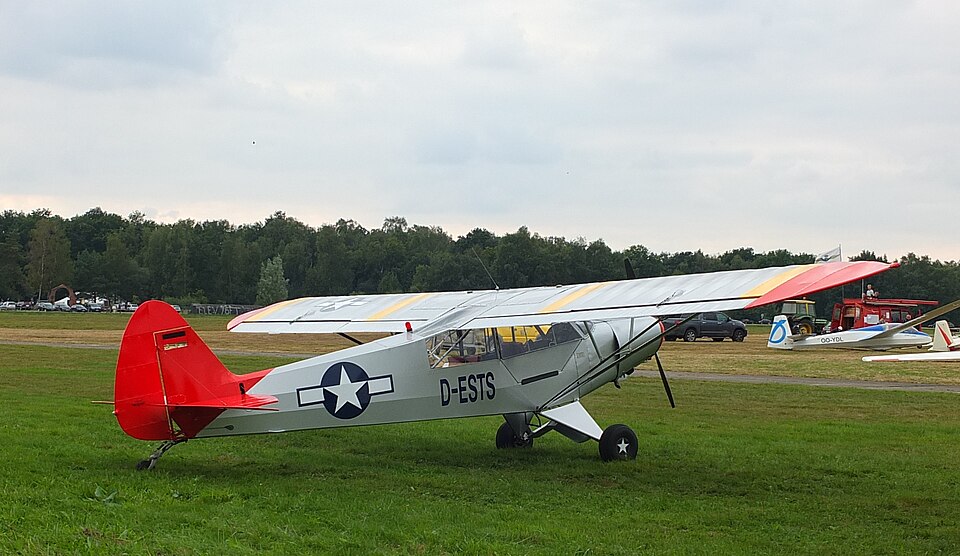
Aircraft and Pilot Information
The accident involved a Piper PA-18-150 Super Cub, registration D-ESTS (formerly I-ROBJ), serial number 18-7893, built in 1962. The aircraft was German-registered and had a valid certificate of airworthiness. Total flight time was 2,277 hours 18 minutes; the last maintenance (100-hour inspection) was on 27 October 2008, with 281 hours 11 minutes flown since. The operator was Paraclub Corsara.
The pilot, a 77-year-old Italian male, held a valid private pilot license with ratings for SEP (Land), wheel/sky mountain landing, and radiotelephony (Italian and English). His medical fitness was last assessed on 20 May 2008. He had accumulated 3,549 hours 56 minutes total, with 192 hours 12 minutes in the previous year and 9 hours 9 minutes in the last 7 days (12 takeoffs and 13 landings on the accident aircraft).
Flight Sequence
On 12 May 2009, the aircraft departed Bolzano Airport at 09:45 local for a tourist flight, with planned intermediate landings at Corvara, Belluno, and an area used for ultralight operations at Pinè, near the village of Termon in Campodenno (TN). After brief stops at Corvara and Belluno, the pilot departed Belluno at 13:55 for Termon. At Termon, the pilot performed a series of takeoffs and landings on runway 06/24.
Accident Description
During the last of three takeoffs from runway 06, approximately at 15:15 local, the pilot lost control of the aircraft. It veered off the runway laterally and impacted apple trees in an orchard adjacent to the runway. The pilot sustained only slight contusions and abrasions; he declined medical assistance. The aircraft was substantially damaged, with repair deemed uneconomical. No other persons were injured. Property damage was limited to a few apple trees and broken branches.
Investigation Findings
On-site inspection on 14 May 2009 (after the wreckage had been removed) revealed tire marks from the main landing gear on the grass runway. The marks began left of the centerline, proceeded in the takeoff direction (060 magnetic), then about 50 meters before the runway midpoint deviated right until the aircraft was oriented perpendicular to the takeoff direction. Braking marks were visible before the runway exit. Propeller impact marks on tree trunks and branches indicated the engine and propeller were rotating normally at impact. Final impact was with a tree at the left front of the engine mount, causing the fuselage to bend significantly left.
Prior to wreckage removal, an examination found the flight controls and tailwheel steering mechanism to be functioning normally. The aircraft's technical documentation and maintenance history were compliant with regulations, with no pre-existing deficiencies noted.
Weather information from nearby stations showed clouds at various altitudes, good visibility, and light winds from the south. Low-level charts indicated isolated thunderstorms, rain showers, and moderate turbulence. Local geothermic winds (valley, mountain, and slope breezes), typical of mountain areas, were noted as a potential critical factor.
Probable Cause
The investigation concluded that the accident was likely caused by a loss of control by the pilot (human factor) resulting from inadequate directional control.