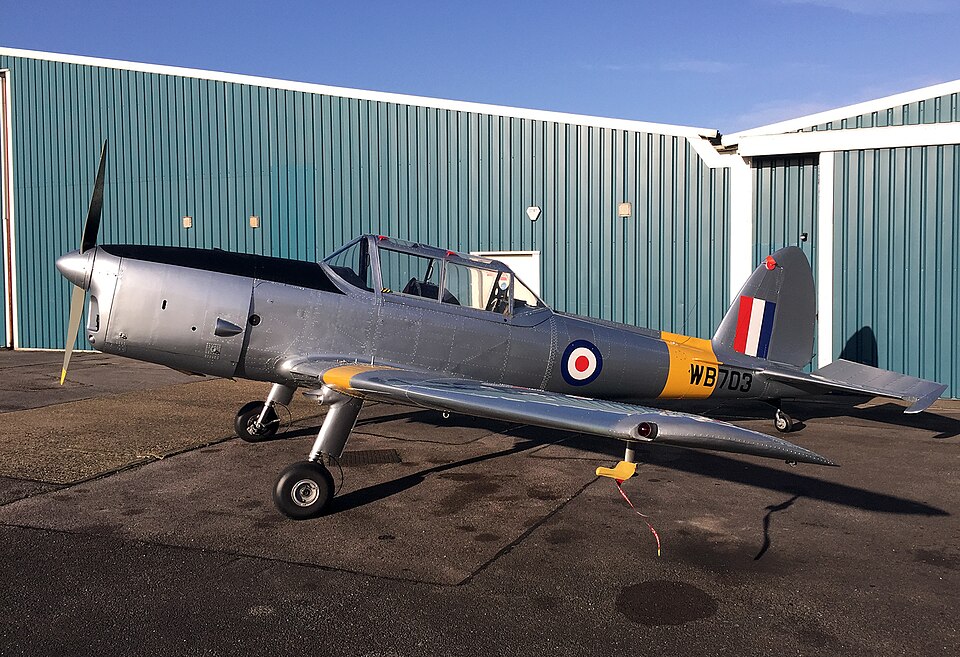
Accident Details
On 21 August 2001 at 1630 UTC, a De Havilland Aircraft Co Ltd. DHC-1 Chipmunk 22A (registration G-ARMC) was involved in an accident during landing at Westbury-sub-Mendip Airfield in Somerset. The aircraft, manufactured in 1950, was powered by a single De Havilland Gipsy Major 10 Mk.2 engine. The flight was private, with one pilot and one passenger on board. Neither occupant was injured.
Sequence of Events
The pilot made a normal approach and touchdown on Runway 29, which had a dry grass surface. The surface wind was reported as 200°/5 kt. The runway was a narrow strip bordered by hedges on both sides and featured a slight curve to the right when landing on Runway 29. There was an uphill gradient that levelled off toward the end, forming a slight crest beyond which the runway was not visible.
As the tail wheel settled onto the runway, the pilot lost forward visibility. With no runway markings, the aircraft began to drift to the right. After approximately 100 metres, the right wing tip struck the hedge, causing the aircraft to spin around to the right and collide with the hedge while travelling backwards. The pilot slid back the canopy in the normal manner and exited the aircraft.
Pilot's Assessment
The pilot assessed the cause of the accident as a loss of visual references, which led to allowing the aircraft to drift to the right and contact the hedge.