History of the Flight
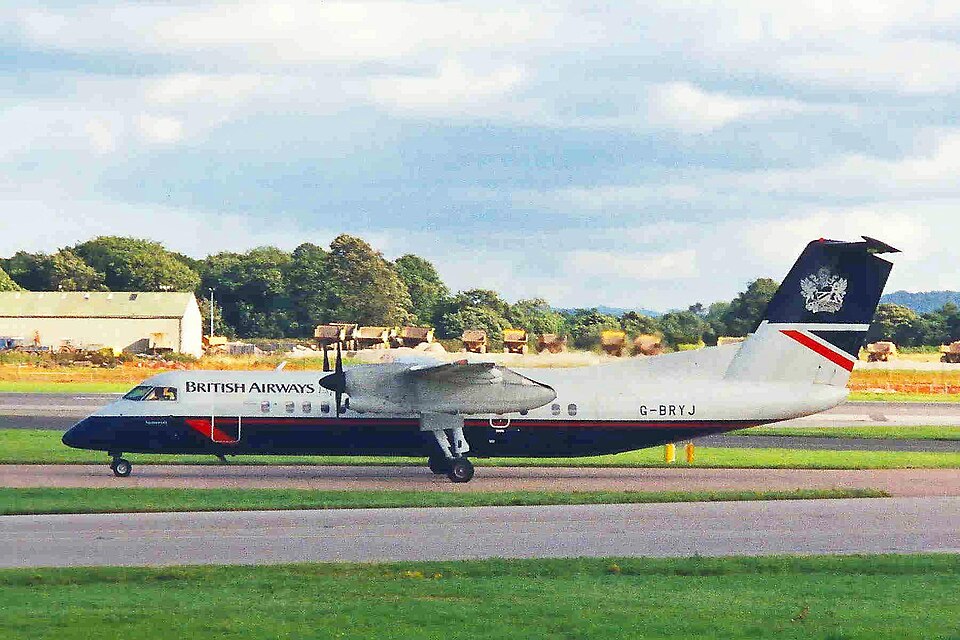
The aircraft, registered G-BRYJ, was scheduled to operate a passenger flight from Aberdeen to Manchester. Upon arrival, the crew learned of an aircraft change. The First Officer, who was the handling pilot, conducted an external inspection and noted only moisture in the baggage door seals. The aircraft taxied and departed from Runway 16 at 1020 hrs. The autopilot was engaged at approximately 6,000 feet during the climb. All anti-icing systems, including the elevator horn, were selected ON. As the aircraft approached the cleared altitude of FL170, the crew observed that the pitch attitude did not decrease as expected. Brief 'MISTRIM' messages appeared. The autopilot was disengaged, but the nose could not be lowered. Both pilots applied force but the aircraft continued climbing to FL175. The commander initiated the recall items for an elevator jam; when he rotated the pitch disconnect handle, elevator control was regained with reduced authority. The commander took over as handling pilot and the crew declared a MAYDAY, requesting diversion to Edinburgh. After disconnection, the commander had normal trim wheel control while the First Officer experienced restriction. A flapless approach and landing on Runway 24 were completed successfully at 1102 hrs.
Meteorological Conditions
The Met Office provided an aftercast for the Aberdeen area. At 1020 hrs, the surface wind was 200°/08 kt, visibility over 10 km, with scattered cloud at 3,000 ft, broken cloud at 16,000 ft. Temperature was +5°C, dew point +3°C, QNH 1004 hPa. Rainfall totals were 3.0 mm the previous day and 5.4 mm on the incident day up to takeoff. Temperature and humidity data at various altitudes showed a decreasing temperature with height, with high humidity near the surface.
Pitch Control System
The aircraft had two independent elevator control cable circuits, each actuating a spring-tab assisted elevator. The left elevator was controlled by the commander's column, the right by the co-pilot's. The columns were interconnected but could be disconnected via a pitch disconnect handle in the centre console. Trim tabs were manually operated by hand wheels. Autopilot pitch control was via servos on the left elevator and pitch trim systems; a long-term load triggered 'MISTRIM' messages.
Analysis of Flight Data
The Flight Data Recorder provided 75 parameters. About 5 minutes after takeoff, the autopilot was engaged at FL64. Initially, both elevators responded normally. Approximately 28 seconds later, while climbing through FL80, a pitch trim input caused the left elevator to respond but the right elevator remained at about -0.3°. This persisted until autopilot disengagement at FL170, about 8 minutes later. After disconnection, the right elevator did not follow left elevator movements. Following pitch disconnect handle operation (about 57 seconds later), the left seat pilot controlled the aircraft using only the left side; the right elevator trailed. Approximately 4 minutes after disconnection, the right elevator resumed responding.
Aircraft Examination
Post-flight functional checks of the elevator and pitch trim systems were satisfactory, cable tensions within limits, and no moisture found on control runs. However, a gel with the consistency of 'wallpaper paste' was found around the spring tab and trim tab bearings. The gel was identified as re-hydrated residues of anti-icing fluids from previous applications. Tests using dry ice to simulate icing conditions showed that the spring tab could lock at low temperatures if water was sprayed on cooled bearings, but freed with slight elevator movement. The aircraft later experienced a similar incident on 17 April 2003, where frayed and kinked cables were found.