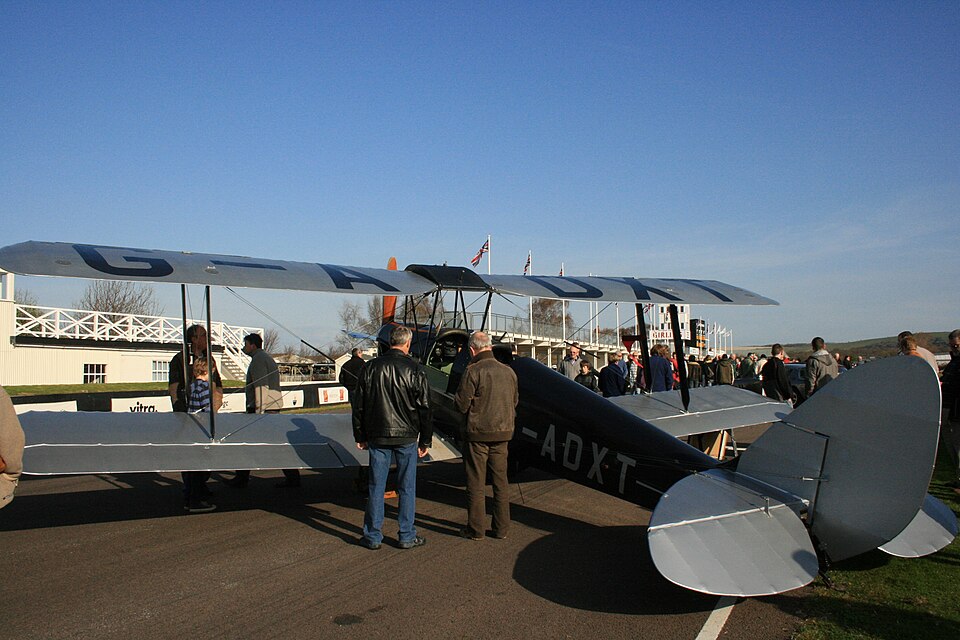
Accident Overview
On 22 June 2001 at 1630 UTC, a De Havilland DH82A Tiger Moth, registration G-ADXT, was conducting an air experience flight near Fishbourne, West Sussex. The aircraft, manufactured in 1935 and powered by a single De Havilland Gipsy Major 1C engine, was operated as a training flight with an instructor and a student on board. Both occupants were uninjured, but the fuselage sustained extensive damage.
Flight Details
The instructor, a 75-year-old commercial pilot with 13,981 total flying hours (2,460 on type), had no flying experience in the previous 90 days. The weather was CAVOK with a surface wind of 120° at 8 to 10 kt. During the flight, the instructor demonstrated a barrel roll to the right. When the aircraft was inverted with the nose above the horizon, the engine stopped. The aircraft was at an altitude of approximately 1,500 feet.
Emergency Landing
After the engine stoppage, the instructor continued the roll until the wings were level and selected the largest green field available. He determined there was insufficient height to dive the aircraft in an attempt to restart the engine using slipstream. He transmitted a 'MAYDAY' distress call while commencing a left-hand circuit for the chosen grass field. The aircraft was set up on final approach at about 55 kt on a southerly heading to utilize the maximum field length.
As the pilot rounded out for landing, he realized the field contained standing crops approximately one metre high. When the main landing gear descended into the crops, it felt as though the aircraft had entered a ditch, and it flipped onto its back, coming to a sudden stop.
Aftermath
Both the instructor and student were uninjured. The instructor advised the student not to undo his safety harness to avoid head or neck injuries. The instructor released himself and then supported the student while he undid his harness.