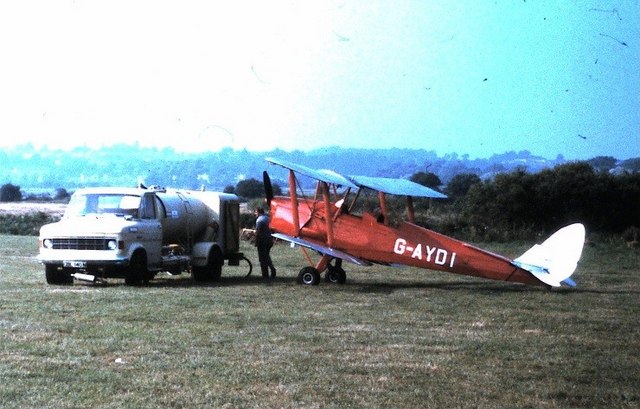
Accident Overview
On 7 April 2013, at approximately 1430 UTC, a privately operated De Havilland DH82A Tiger Moth (registration G-AYDI, serial 85910, year of manufacture 1943) was landing on grass Runway 23 at Hampstead Norris Airfield, Berkshire. The aircraft was powered by a single De Havilland Gipsy Major 1C piston engine. The pilot, aged 35, held a Private Pilot’s Licence and had a total flying experience of 405 hours, of which 119 were on type. In the preceding 90 days he had flown 3 hours, and in the last 28 days, 2 hours.
Sequence of Events
The pilot reported that weather conditions were good with a surface wind variable at 0–10 kt. He flew a straight-in approach, in apparently calm conditions, rather than joining overhead. As he flared the aircraft prior to touchdown, a gust of wind from the south caused the right wing to drop and strike the surface. The aircraft yawed to the right, rocked back onto its left wing, which also struck the ground, and left the runway to the right before coming to a halt.
Damage and Injuries
The pilot sustained no injuries. The aircraft suffered damage to both lower wings, the elevator, and the lower section of the rudder.
Pilot Comments
The pilot stated that he had not anticipated the possibility of a crosswind. He noted that had he done so, he would have used a ‘wheeler’ landing technique.