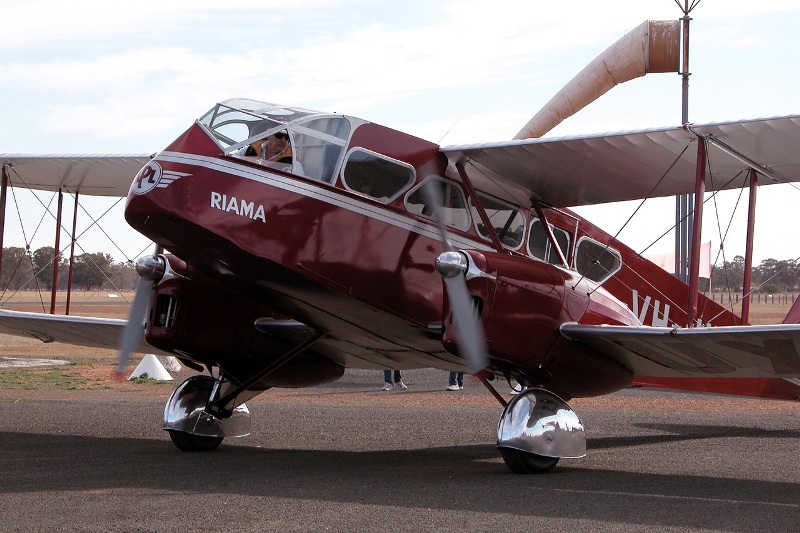
Flight Details
At about 1107 Eastern Standard Time on 1 October 2012, a de Havilland Aircraft Pty Ltd DH-84 Dragon, registered VH-UXG, departed Monto, Queensland, on a private flight to Caboolture under visual flight rules (VFR). The pilot/owner and five passengers were on board. Weather at departure included a light south-easterly wind, high overcast, and good visibility.
Communication and Witnesses
After about 1230, the aircraft was seen near Tansey, approximately 150 km north-west of Caboolture, flying south-east at an estimated 3,000 ft in fine but overcast conditions. At 1315, the pilot contacted Brisbane Radar air traffic control (ATC), reporting a position 37 NM (69 km) north of Caboolture and requesting navigation assistance. At 1318, the pilot advised ATC that the aircraft was in 'full cloud.' Communications continued, at times relayed through a commercial flight and a rescue flight due to limited ATC radio coverage at low altitude.
At about 1320, a friend of a passenger received a telephone call from that passenger, who said they were 'lost in a cloud' and kept losing altitude. Witnesses in the Borumba Dam, Imbil, and Kandanga areas, 70 to 80 km north-north-west of Caboolture, reported hearing and briefly seeing the aircraft flying in and out of low cloud between about 1315 and 1415. At 1348, the pilot advised ATC that the aircraft had approximately one hour of endurance remaining. The last recorded transmission from the pilot was at 1404.
Accident and Search
Australian Search and Rescue (AusSAR) coordinated a search. The wreckage was located on 3 October 2012, about 87 km north-west of Caboolture, on the northern side of a steep, densely wooded ridge about 500 m above mean sea level. The Australian Transport Safety Bureau (ATSB) determined that the aircraft probably impacted terrain at about 1421 on 1 October 2012. Preliminary analysis indicated that the aircraft collided with trees and terrain at a moderate to high speed, with a left angle of bank; direction of travel at impact was toward the south-south-west. The search was hindered by difficult local weather and terrain, and the aircraft's emergency beacon ceased due to impact damage.