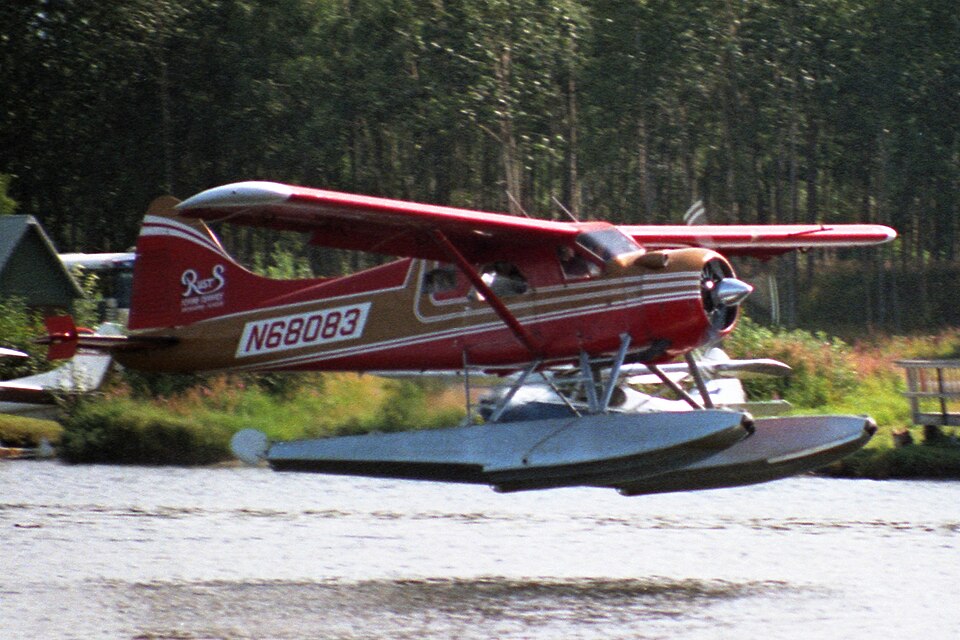
Accident Sequence
The pilot reported that during takeoff in the float-equipped airplane, he observed the left float begin to move into his peripheral vision through the left cockpit window. Simultaneously, the airplane started to yaw left. Subsequently, the left wing struck the water, causing the airplane to nose over. The right wing separated from the fuselage during the event.
Pilot and Passenger Reports
Passengers consistently described choppy water conditions at the time of the accident. One passenger noted white caps visible on ocean waves in the distance. According to the passengers, during the takeoff run, the airplane impacted a swell or wave, nosed over abruptly, and the cabin rapidly filled with water.
Post-Accident Examination
Examination of the float assembly revealed fractures in the left front flying wire attachment fitting and the right rear flying wire attachment strap. Hole elongation was observed in the left rear flying wire attachment fitting. Additionally, the bolts attaching the two left flying wire attachment fittings to the left float were bent, and the two flying wires attached to the fractured fitting and strap were buckled.
While some areas of corrosion were found on the fractured left forward fitting, the total corroded area represented a small percentage of the total cross-section. The remainder of the fracture and associated deformation of the lug were consistent with ductile overstress fracture. Similar corrosion areas were also noted on each of the intact flying wire attachment fittings.
Post-accident testing performed by the float manufacturer showed that buckling of flying wires similar to that observed on the accident airplane was reproduced only at strap and fitting failure loads above 9,000 pounds force. The design specification load was 3,453 pounds of force. This indicates that the small amount of corrosion on the fractured fitting did not reduce its load-carrying capability below the design specification load. Both the fitting and strap fractured due to overload.
Probable Cause
The official probable cause is the airplane's floats impact with an ocean wave or swell, which exceeded the design load specifications of the flying wire assemblies and resulted in a partial separation of the float assemblies.