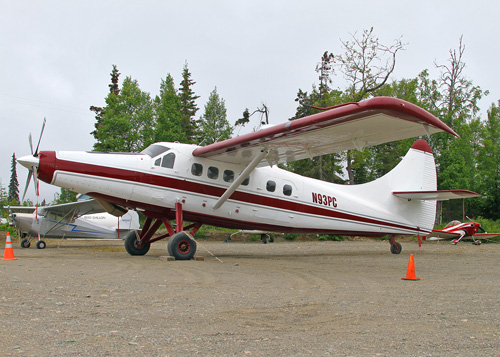
Accident Details
A pilot operating a single-engine airplane on a charter flight experienced an aerodynamic stall shortly after takeoff from Soldotna Airport. The airplane impacted the ground about 2,320 feet from the departure runway threshold and 154 feet right of the centerline. An extensive postcrash fire consumed most of the cockpit and cabin. The pilot was properly certificated, and toxicology tests were negative for carbon monoxide, alcohol, or drugs. No crash-resistant recorder was installed.
Weight and Balance
The airplane was loaded with cargo (food and supplies) at the operator's base in Nikiski, estimated at 300 pounds by the lodge operator. Passenger weights were estimated at a total of 1,350 pounds, and baggage at 80 pounds. The load manifest listed a total weight of 1,730 pounds with no balance data. The cargo was not weighed, and the pilot did not document weight and balance calculations. The first leg from Nikiski to pick up passengers was uneventful. At Soldotna, after loading passengers and baggage, the airplane's weight exceeded the maximum gross weight of 8,000 pounds by about 21 pounds, and the center of gravity (CG) was at least 5.5 inches aft of the 152.2-inch limit. A kinematics study using video from a passenger's smartphone indicated the CG was likely just past 161 inches, far aft of the limit.
Flight Sequence
A video recovered from a passenger's phone showed the takeoff roll and initial climb. For the first 12 seconds, the airplane accelerated linearly through liftoff. The pitch angle remained constant for about 4 seconds then began increasing. About 14 seconds after starting the takeoff roll, speed decreased from 68 mph to 44 mph as pitch angle increased at 2.8 degrees per second, reaching about 30 degrees. The airplane then experienced a sharp right roll before impacting the ground. The low speed, rapid right roll, and pitch down were consistent with an aerodynamic stall. The constant pitch rate indicated an aft CG where elevator pitch-down authority was insufficient.
Investigation Findings
The flaps were set to the full-down (landing) position during takeoff, contrary to recommended procedures in the airplane flight manual (AFM). This setting would have exacerbated the nose-up pitching moment due to increased downwash on the tail. The cargo actually weighed about 2.4 times the 300-pound estimate, and the total cargo and baggage weight exceeded the cargo net's load limit of 750 pounds by more than 50 pounds. The operator did not comply with federal regulations requiring adherence to weighing requirements or takeoff weight limitations. The investigation concluded that the airplane exceeded the aft CG limit at takeoff, resulting in an uncontrollable nose-up pitch leading to an aerodynamic stall. The incorrect flap setting contributed to the pitch-up moment, but the stall would likely have occurred even with correct flap position due to the extreme aft CG.