Display Sequence
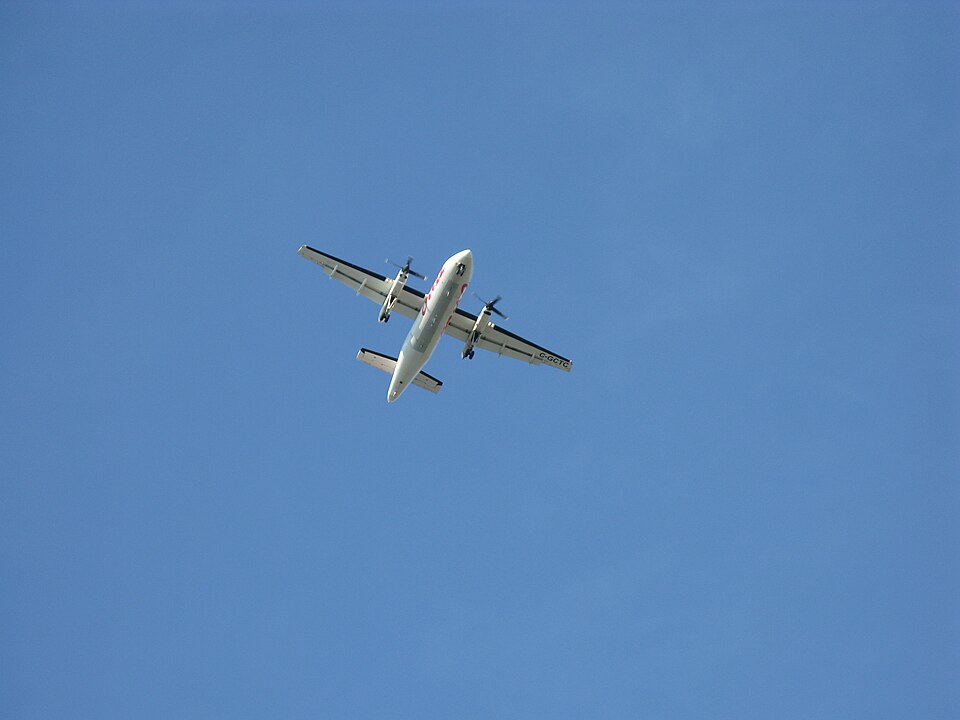
During the 1984 Farnborough International Air Display, de Havilland Canada planned a multi-aircraft display featuring four aircraft: a DHC-5D Buffalo (registration C-GCTC), a DHC-6 Twin Otter (C-GFJQ), a Dash 7 prototype (C-GNBX), and a Dash 8 prototype (C-GDNK). The display began at 16:16 when brakes were released. The Buffalo was the third aircraft in the formation, behind the Dash 7 and Dash 8.
Maneuvers
Immediately after takeoff, the Buffalo executed a steep climb to 1,000 feet above ground level (agl). It then performed a descending right turn, followed by a low-level flypast along the display line at 250 feet agl and an airspeed of 215 knots. The aircraft then entered a climbing left turn through approximately 270 degrees, before reversing bank to position for a right-hand final approach for a STOL landing on runway 25.
During this maneuver, the landing gear was selected down, and the copilot lowered the ramp and opened the rear cargo door. At 450 feet agl, the nose dropped significantly and the rate of descent increased. The DHC-5 continued in a steep side-slipping and descending right turn. Shortly before touchdown, the rate of descent reduced slightly.
Accident
The aircraft landed very hard. The impact caused the nose gear to collapse, both wings to fail, and the propellers to disintegrate after contacting the runway. Debris from the accident caused some damage to vehicles and three aircraft in the static display area.
Probable Cause
The official findings state the probable cause as an error of judgment by the aircraft commander, with unfavorable weather conditions, a transitory handling problem while flying outside the tested flight regime, and pressure on the commander to complete his flying sequence as probably contributing factors.