What happened
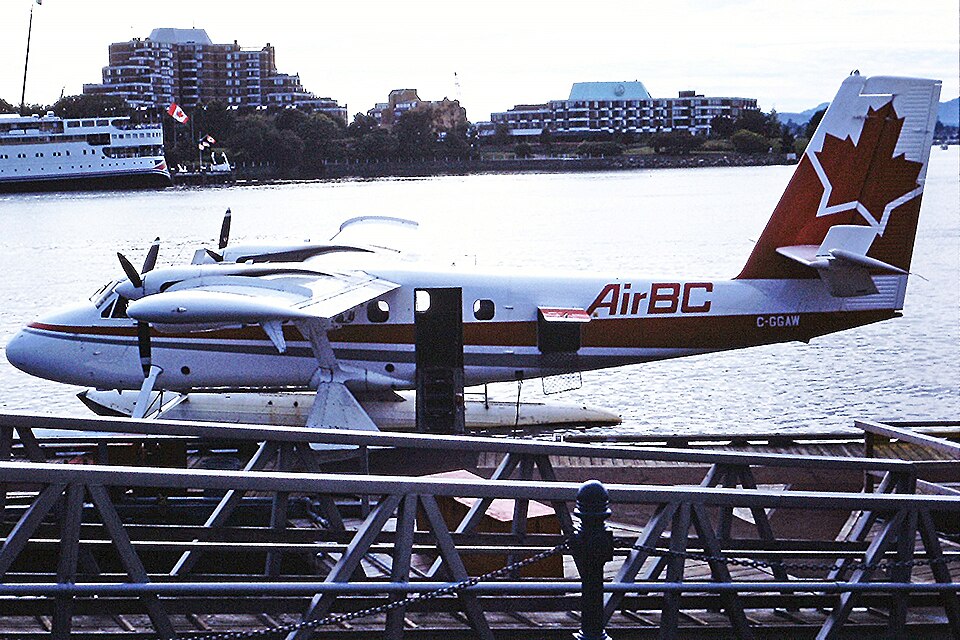
On a scheduled flight from Vancouver Harbour water aerodrome to Victoria Harbour, a de Havilland DHC-6-100 operated by West Coast Air Ltd. experienced a critical mechanical failure during the initial climb. The aircraft, carrying 15 passengers and two crew members, departed at approximately 1510 Pacific standard time. Shortly after lifting off from the water, an audible bang and a sound resembling gravel hitting the airframe occurred. This was accompanied by flames appearing near the forward section of the right-hand engine, which subsequently lost all propulsion.
At an altitude estimated between 50 and 100 feet, the aircraft entered a nose-down, right wing-low attitude. Approximately 25 seconds after the engine failure, the plane struck the water. The impact caused the right-hand float and the wing to separate from the fuselage. Despite the impact, the aircraft remained upright and partially submerged, allowing all 17 occupants to evacuate through the main door and pilot doors. Passengers and crew gathered on the left wing and fuselage until rescue vessels, including a SeaBus, arrived at the scene. While the passengers were transported to a hospital for observation, there were no serious injuries reported. The aircraft eventually sank, and all wreckage was retrieved within five days.
Findings
Investigations determined that a planetary gear within the propeller reduction gearbox of the No. 2 engine disintegrated, causing the drive shaft to disconnect from the propeller. This failure originated from wires in the planetary gear oil strainer screen that fractured due to fatigue following a previous overhaul. The resulting debris likely damaged the planetary gear bearing sleeve.
While the aircraft's airspeed remained above minimum control speed (Vmc) during the failure, the crew did not reduce power on the operating engine to mitigate asymmetric thrust, leading to a loss of control as impact approached. Other contributing factors included the high-drag configuration caused by full flaps at low altitude and the lack of an engine oil contamination annunciator or an auto-feather system, which could have provided earlier warning or assisted in managing the drag from the windmilling propeller.