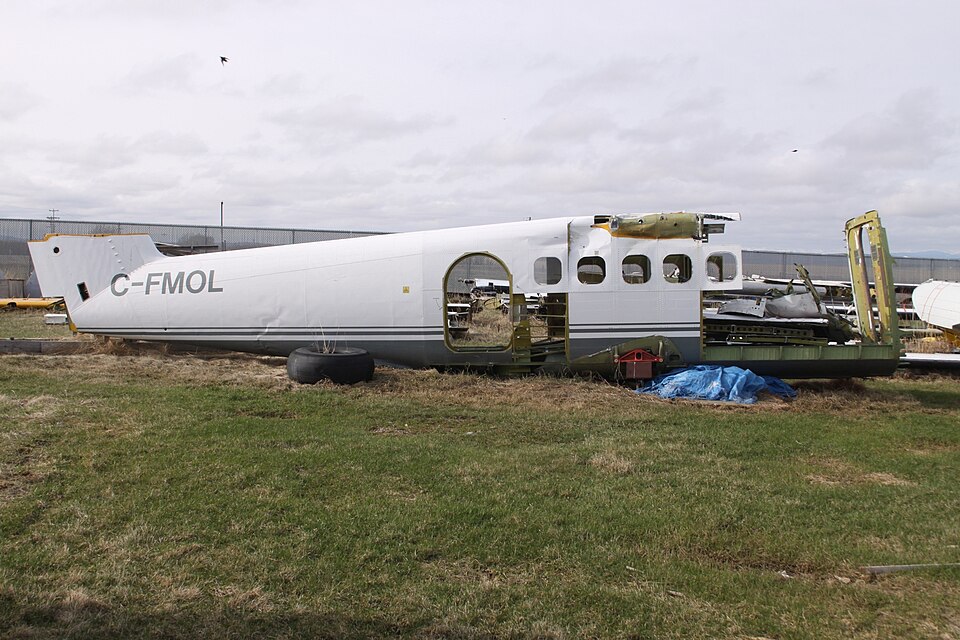
Accident Details
On an unspecified date, a North-Wright Airways Ltd. de Havilland DHC-6 Twin Otter, registration C-FMOL, was departing from a gravel strip approximately 1,500 feet long at Mile 222 of the Canol Road, near the Tsichu River, Canada. The takeoff was initiated to the north and into wind.
Immediately after becoming airborne, the aircraft encountered a strong right cross-wind and settled back onto the strip. The left wheel contacted willows that had overgrown the edge of the strip. The aircraft veered left into the willows at about 60 knots and began to decelerate. Prior to flying speed being regained, the aircraft rolled off the end of the strip and came to rest in a shallow creek.
Damage and Injuries
The right wing partially separated from the fuselage at impact. The forward fuselage, nose gear, and right main gear sustained substantial damage. The pilot and first officer were uninjured.
Flight Purpose and Loading
The purpose of the trip was to move hunting gear and outfitter supplies back to an airstrip at Mile 170 of the Canol Road (Godlin Lake). The aircraft was at or near gross weight at the time of the occurrence.