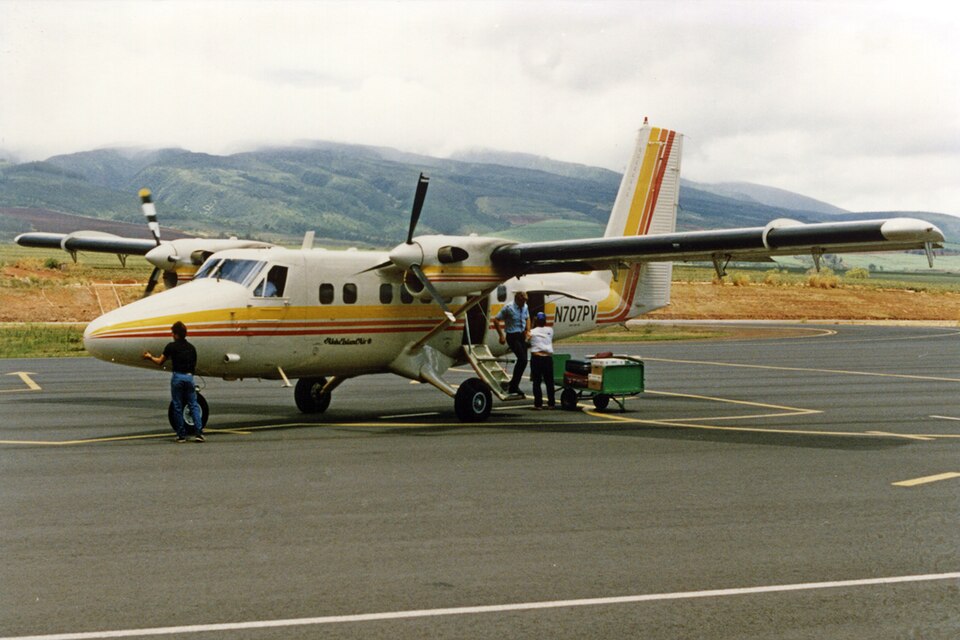
Terrain collision involving Aloha Islandair flight 1712

20 fatalities • Molokai, United States of America • Landing (descent or approach)

A De Havilland DHC-6 crashed into mountainous terrain near Halawa Bay, Hawaii, resulting in the deaths of all 20 people on board.

What happened

On a scheduled nighttime passenger flight from Maui to Molokai, Hawaii, an Aloha Islandair flight involving a De Havilland DHC-6, registration N707PV, struck hilly terrain near Halawa Bay. The accident occurred at an altitude of approximately 500 feet after the aircraft had transitioned from flying over water to crossing the coastline. During the approach, the aircraft was traveling on a heading that ran parallel to the northern shore of the island.

Findings

Investigations revealed that the pilot committed a navigational error, operating under the mistaken impression that the flight path was successfully bypassing the northern part of Molokai. At the time of the impact, low cloud cover was masking the tops of the mountains in the vicinity. The crash resulted in 20 fatalities and no survivors.

Official conclusions determined that the accident was a controlled flight into terrain. This was driven by the pilot's choice to maintain visual flight rules while flying at night into instrument meteorological conditions, which prevented the crew from seeing the rising landscape. Additional contributing factors included poor management oversight regarding training and operations at Aloha Islandair, alongside inadequate FAA supervision during the airline's period of significant growth.

Probable cause

The pilot's decision to fly under visual flight rules at night into instrument meteorological conditions led to the aircraft striking obscured terrain.

Frequently asked questions

What happened in the 1989-10-28 De Havilland DHC-6 Twin Otter accident near Molokai, United States of America?

A De Havilland DHC-6 crashed into mountainous terrain near Halawa Bay, Hawaii, resulting in the deaths of all 20 people on board.

Were there any fatalities in the 1989-10-28 De Havilland DHC-6 Twin Otter accident?

The accident was fatal, resulting in 20 fatalities.

What aircraft was involved and where did it happen?

The accident on 1989-10-28 involved a De Havilland DHC-6 Twin Otter, registration N707PV, operated by Aloha Island Air, at Molokai, United States of America.

What was the probable cause of the accident?

The pilot's decision to fly under visual flight rules at night into instrument meteorological conditions led to the aircraft striking obscured terrain.

Loading the flight search…