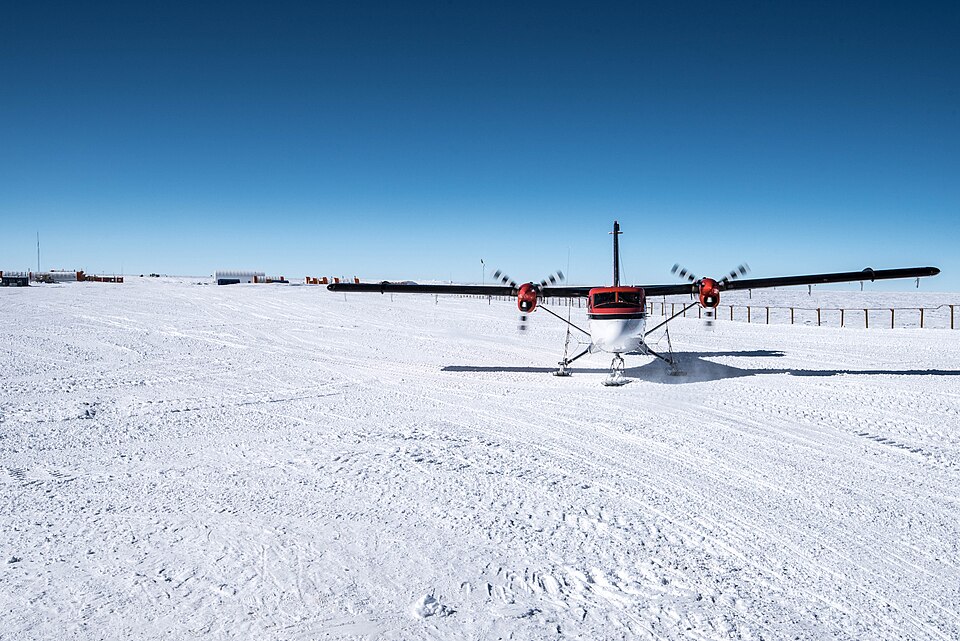
Aircraft loss following landing on Arctic ice

No fatalities • Arctic, World • Landing (descent or approach)

An aircraft carrying nine people sank after one of its skis broke through the ice during a landing near the North Pole.

What happened

During an operation conducted in the vicinity of the North Pole, an aircraft performed a landing on a surface covered in ice. Following the touchdown, one of the plane's skis penetrated the icy crust, causing the aircraft to come to a halt.

All nine people on board, which included seven passengers and two crew members, were able to exit the cabin without injury. While the occupants successfully evacuated, the aircraft remained in the unstable area and subsequently submerged into the water, resulting in the total loss of the airframe.

Findings

  • The structural failure of the ice surface under the weight of the landing gear led to the immobilization of the plane.
  • The breakage of the ice surface prevented the aircraft from being recovered and led to its eventual sinking.

Probable cause

The aircraft sank after the ice surface failed under the pressure of a landing ski.

Frequently asked questions

What happened in the 1982-05-09 De Havilland DHC-6 Twin Otter accident near Arctic, World?

An aircraft carrying nine people sank after one of its skis broke through the ice during a landing near the North Pole.

Were there any fatalities in the 1982-05-09 De Havilland DHC-6 Twin Otter accident?

No fatalities were recorded in this accident.

What aircraft was involved and where did it happen?

The accident on 1982-05-09 involved a De Havilland DHC-6 Twin Otter, registration C-GKBO, operated by Panarctic Oils, at Arctic, World.

What was the probable cause of the accident?

The aircraft sank after the ice surface failed under the pressure of a landing ski.

Loading the flight search…