Incident Overview
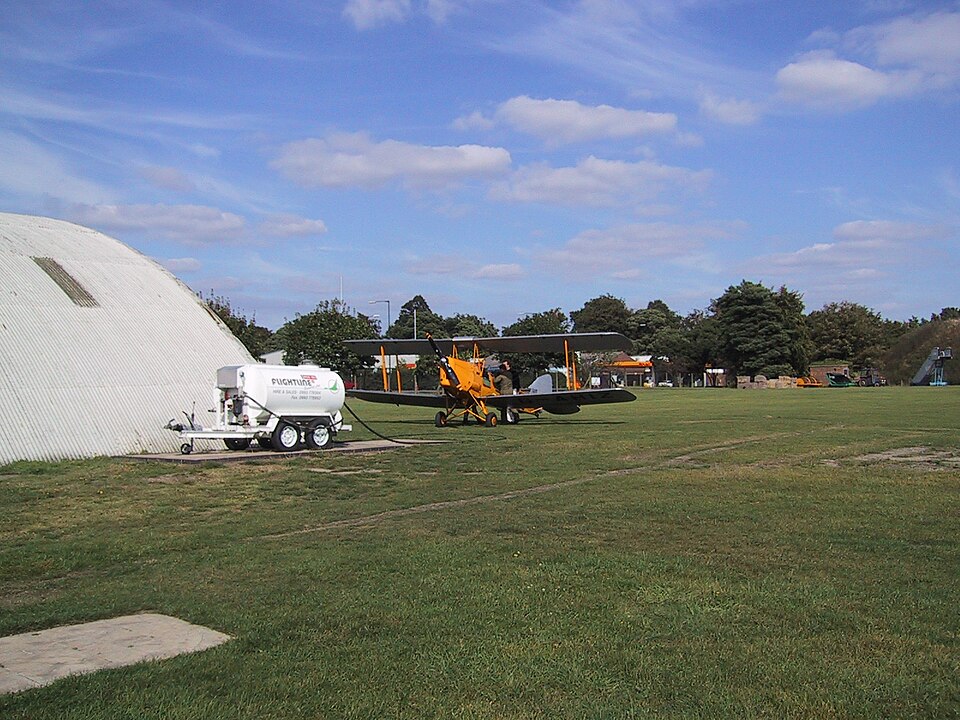
On 17 August 2003 at 1335 UTC, a DH82A Tiger Moth, registration G-AHIZ, manufactured in 1944 and powered by a single De Havilland Gipsy Major 1C piston engine, was involved in an incident at Woburn Abbey, Bedfordshire. The flight was a private flight with one pilot on board and no passengers.
Sequence of Events
The pilot, who was leading a formation of similar aircraft intending to land on grass Runway 01, experienced a tailwind and sink during the approach. He decided to execute a go-around and repositioned for a curved final approach to the reciprocal Runway 19. The surface wind was reported as 145º/10–14 kt, giving a crosswind component of approximately 10 kt.
While on the approach, the pilot was aware of one marked post and a tree. While avoiding these obstacles just prior to touchdown, the aircraft hit another post with its lower right wing. The aircraft landed without further incident and taxied to the parking area where it was shut down.
Aircraft Damage
The nature of damage was a lower right wing spar broken.
Pilot Information
The pilot, aged 45, held a Private Pilot's Licence. His total flying experience was 552 hours, of which 275 were on type. In the last 90 days he had flown 34 hours, and in the last 28 days, 11 hours. The pilot reported that he had limited experience of short field landings and was concentrating on the position of other aircraft in his formation who were landing behind him.