Incident Details
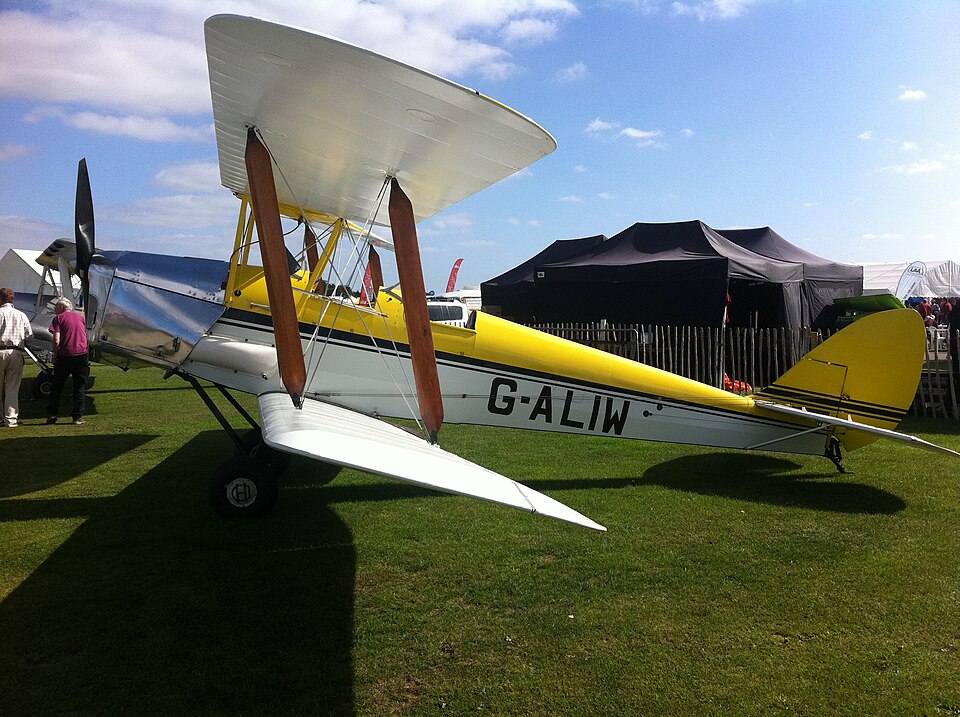
On 15 February 2005 at 1330 UTC, a DH82A Tiger Moth (registration G-ALIW) was conducting a private flight at a private strip in Littlebredy, Dorchester, Dorset. The aircraft, manufactured in 1938 and powered by one De Havilland Gipsy Major I piston engine, was being used for a licence revalidation. The pilot, an Airline Transport Pilot with an Instructor Rating, aged 68, had 8,186 total flying hours (568 on type). The purpose was to practice circuits, upper air work, and a short cross-country with a practice forced-landing.
After the instructor demonstrated a 'three-point' landing, the pilot performed a 'wheeler' landing, intending to let the tail settle before applying power to go around. However, before the tailskid touched the ground, the right undercarriage collapsed. The aircraft tipped onto its nose and right wingtip before settling back upright. Both pilots evacuated normally. The instructor reported the touchdown was normal and damage was relatively light due to low groundspeed. Damage included the propeller, underside of the lower wing, and a detached undercarriage strut on the right side.
Examination Findings
The instructor, a retired metallurgist, found the right undercarriage drag strut had detached from the fuselage fitting due to failure of the swivel bolt (part number H.22186). Visual examination indicated the fracture involved a fatigue crack. The AAIB examined half the fracture and concurred, adding that it appeared to be low-cycle fatigue over a relatively short period, and that the bolt passing through the strut fork fitting and the swivel bolt had likely been excessively tightened at some point.
Historical Context
The history of the failed item is unknown, but a De Havilland investigation in 1960 identified an almost identical failure. That report did not recommend any action, as it was the first recorded defect of this nature.
Maintenance Recommendations
The aircraft maintainer advised inspecting swivel bolts during future annual inspections of Tiger Moth aircraft, and noted it would be prudent for other maintainers to do likewise. The age and history of these components are rarely recorded, and loads can vary with runway conditions and lubrication effectiveness, since the bolt must articulate freely as undercarriage struts spread under load.