Introduction
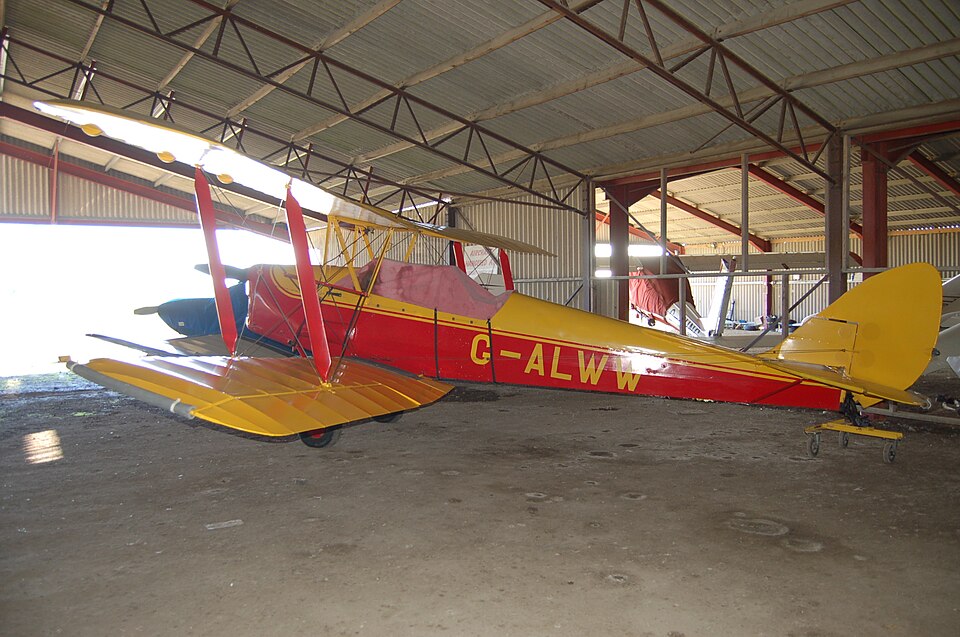
On 21 April 2010 at 1040 UTC, a de Havilland DH82A Tiger Moth (registration G-ALWW, year of manufacture 1943) was involved in a collision with a parked Pawnee aircraft during taxiing at Bidford, Warwickshire. The aircraft was engaged in a private flight with one crew member and no passengers.
Accident Details
During the final stages of taxiing for departure, the pilot of the Tiger Moth gave way to a glider under tow. As he manoeuvred the aircraft onto the grass runway, it collided with a Pawnee aircraft parked near the start of the runway. The pilot reported that his lookout may have been compromised by his attention becoming focused on the glider under tow and on avoiding disturbing a second parked glider with his propeller slipstream.
Damage and Injuries
The Tiger Moth sustained a propeller strike and damage to the left wing interplane struts and flying wires. The Pawnee also sustained damage. No injuries were reported for the crew; as there were no passengers, passenger injuries are not applicable.
Pilot Information
The pilot held an Airline Transport Pilot's Licence and was 63 years old. His total flying experience was 15,912 hours, of which 170 hours were on the Tiger Moth type. In the last 90 days he had flown 10 hours, and in the last 28 days, 7 hours.
Source
Information for this article was derived from the AAIB Bulletin (8/2010, ref: EW/G2010/04/20) based on the Aircraft Accident Report Form submitted by the pilot.