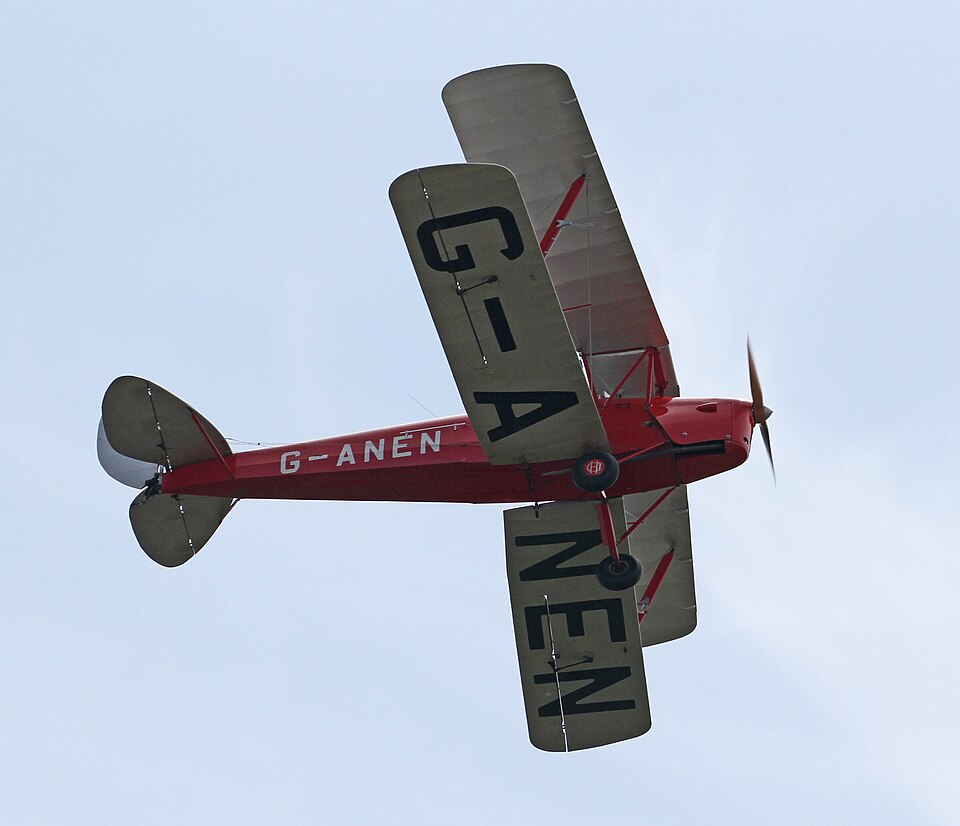
Incident Overview
On 17 March 2003 at 1545 UTC, a DH82A Tiger Moth (registration G-ANEN) was conducting a private flight from Chichester (Goodwood). The aircraft, manufactured in 1942, was powered by a single De Havilland Gipsy Major 1H piston engine. The pilot, aged 63 and holding a Private Pilot's Licence, had accumulated 346 flying hours (168 on type), with 8 hours in the last 90 days and 5 hours in the last 28 days. There was one passenger on board.
Pre-takeoff Checks and Climb
Prior to takeoff, the pilot checked the magnetos and found both left and right systems operating normally. During the third circuit from Runway 14, while climbing through 400 feet, the engine RPM dropped from its normal 2,000 RPM to less than 1,600 RPM.
Forced Landing and Post-accident Inspection
Unable to maintain level flight, the pilot initiated a left turn and conducted a forced landing onto grass Runway 24. The aircraft landed well down the runway. As it decelerated, the pilot applied full left rudder to avoid a possible overrun, but this caused the left lower wing to strike a runway marker before the aircraft stopped. The damage was limited to torn fabric on the left wing.
A post-accident check of the right magneto revealed a decrease in engine RPM outside normal limits, but this alone could not account for the power loss. Replacing the associated spark plugs resolved the issue.