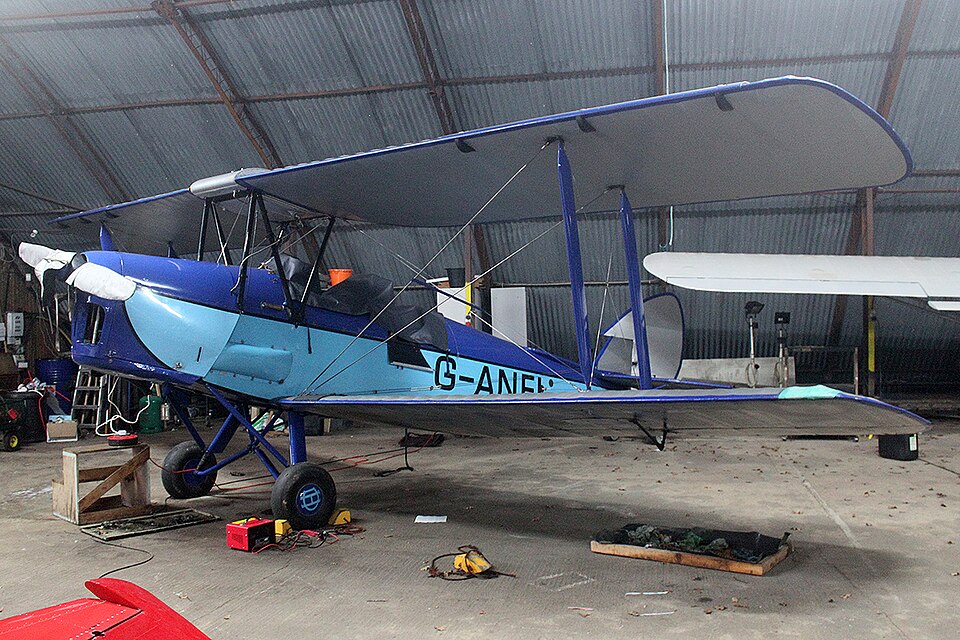
Accident Details
On 4 July 1998 at 1615 UTC, a DH82A Tiger Moth, registration G-ANFL, was involved in a landing accident at Little Snoring Airport, Norfolk. The aircraft, manufactured in 1941, was powered by one de Havilland Gipsy Major 1 piston engine. The flight was a private training flight with one pilot and one passenger on board; neither sustained injuries. The landing gear and propeller suffered substantial damage.
Training Flight
The aircraft had departed Swanton Morley and flown to Little Snoring to provide training for a pilot holding a Private Pilot's Licence but inexperienced on the Tiger Moth. The commander, aged 49, held a Private Pilot's Licence and had a total flying experience of 317 hours, with 191 hours on type. In the previous 90 days, he had flown 4 hours, and in the last 28 days, 1 hour.
Approach and Landing
Upon joining the circuit, the wind was observed to be straight down Runway 25, estimated at 10 to 15 kt. The aircraft was positioned for a glide approach to Runway 25, with the handling pilot in the rear seat. The approach was flown at 50 kt with the intended point of landing just beyond the threshold. Both the pilot and witnesses on the ground considered the approach normal until, approximately 20 yards short of the threshold and at a height of about 10 feet, the aircraft began to sink rapidly. It contacted the ground heavily on its left wheel and turned through approximately 120 degrees before coming to rest.
Pilot's Assessment
The pilot considered that the cause of the accident was wind shear close to the ground.