History of Flight
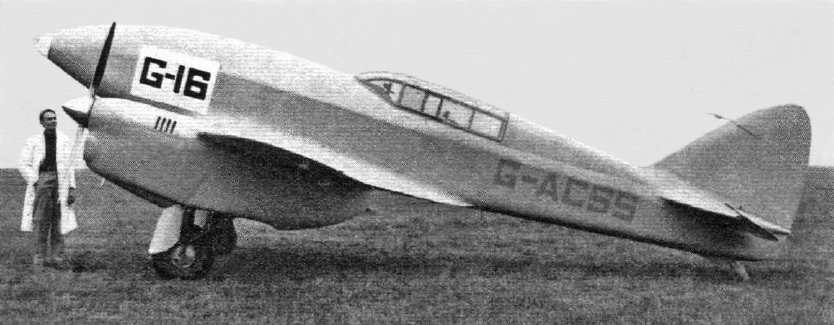
On 28 October 2002, a DH88 Comet, registration G-ACSS, was conducting a local test flight from Old Warden Aerodrome in Bedfordshire to obtain a Permit to Fly. The sole pilot, aged 55 and holding an Airline Transport Pilot's Licence with 10,130 total flying hours (26 on type), completed all flight test requirements and made an approach to Runway 29. The pilot intended to touch down on the main wheels in a nose-up attitude. The aircraft bounced four times; on the fifth touchdown, the right main landing gear collapsed. The aircraft sank onto its right wingtip and the underside of the right engine nacelle before sliding in a tightening arc to the right, coming to rest after turning approximately 150° from its landing heading. The pilot stated he attempted to damp the bouncing by lowering the nose.
Landing Gear Description
The main landing gear of the DH88 is retractable, mounted on a tubular steel frame attached to the underside of the wing, which also serves as the engine mount. A screwjack mechanism, driven by a single centrally mounted electric motor through gears and shafting, raises and lowers the gear. Microswitches in the right landing gear mechanism limit the range of movement; there are no mechanical up or down locks or stops. Each main wheel axle is mounted on a pair of spring struts pivoted on the mounting frame. The lower drag brace consists of two parallel struts connected by a cross-tie, pivoted near the bottom of the spring strut outer tubes. The two upper drag brace struts and the screwjack ram arms both link to the aft end of the lower drag brace and pivot about separate points on the rear mounting frame. The screwjack nut is attached to the ram assembly by six 5/32-inch mild steel rivets. The down limit microswitch is set so that, with the gear fully extended, the articulating joint of the drag brace assembly is just below the direct line between specific points, ensuring that wheel drag loads generate compressive loads in the drag brace struts and tensile loads in the screwjack.
Examination of Damage
Examination revealed that the right main landing gear lower drag brace had bent downwards and backwards at the point coincident with the cross brace. The upper drag brace struts buckled near their lower ends. The rivets attaching the screwjack nut to the ram failed in shear, consistent with a tensile force. After the screwjack separated, the freed ram pushed the jack body up into the underside of the wing and punctured the engine oil tank in the rear of the right nacelle. The underside of the right nacelle was slightly crushed, and the exhaust system flattened by runway contact. There was slight damage to the structure of the right wingtip.
Analysis
Photographic evidence indicated the aircraft first touched down in a slightly nose-high attitude, with each subsequent touchdown at a progressively less nose-up attitude and greater compression of the shock struts. The fifth touchdown, made on the right wheel only, resulted in the right landing gear spring struts appearing to fully compress. Most probably, this full compression generated high wheel drag loads, leading to high compressive loads in the drag brace elements. The longer upper drag brace struts likely became unstable and bowed, consistent with photographs showing the drag brace articulating downwards at its centre joint. The high compressive loads in the upper drag brace struts generated considerable tensile forces in the screwjack, sufficient to shear the ram-to-nut attachment rivets. These forces were also probably responsible for bending the aft ends of the lower drag brace downwards while its cross-tie was jammed on the wheel.