History of the Flight
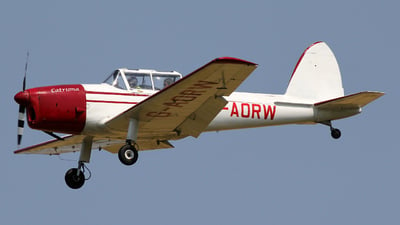
The DHC-1 Chipmunk 22A, registration G-AORW, departed Prestwick earlier on 25 February 2006 for a flight to the island of Islay with two persons on board. The passenger was also an experienced Chipmunk pilot. The aircraft returned to Prestwick from the northwest with the intention of joining the base leg for Runway 03. During the completion of pre-landing checks, all engine temperatures and pressures were observed to be normal, but a slight vibration was felt through the airframe. Approximately 15 seconds later, without warning, the engine stopped. The aircraft was about 0.5 miles offshore with insufficient height to glide to the runway. With a built-up area immediately ahead, the pilot elected to carry out a forced landing on an unoccupied section of Prestwick Beach. Neither the pilot nor the passenger sustained injuries.
Engine Examination
Later examination revealed that the engine's crankshaft had failed immediately aft of the second main-bearing journal. An initial assessment indicated that the failure initiated in the radius between the second main journal and the forward web of the No 2 crank throw. Oil was present on all bearing surfaces, the oil passageways were free from obstruction, and the crankshaft journals showed no evidence of overheating. Mechanical damage to No 2 and No 3 bearings prevented assessment of their pre-failure condition; however, the condition of the remaining bearings indicated they had been serviceable prior to the failure. Dimensional checks confirmed that the crankshaft had not been re-ground since manufacture. Damage to the accessories drive gear train prevented the ignition timing from being checked, but records confirmed that the timing had been retarded in accordance with Mod 2661. The crankshaft part number confirmed it was of the type superseded by Mod 2602.
Laboratory Analysis
Laboratory analysis revealed that the crankshaft failure resulted from crack progression by a high cycle fatigue process. The initiation site could not be identified due to smearing of the fracture surface as the failure occurred. Microsections taken from the crankshaft showed no material abnormalities or corrosion and that the crankshaft had not been surface hardened.
Background on Crankshaft History
In the late 1950s, Bristol Siddeley Engines Ltd conducted tests on numerous crankshaft failures in civil and military Chipmunks. Their test reports indicated that engines subjected to comparatively short periods of abnormal operation, such as aerobatic manoeuvres, were susceptible to cracking and failure in the region of the No 2 or No 3 crankpin webs. The average crankshaft life at failure was 850 hours. Three modifications were introduced: Mod 2602 introduced a crankshaft of different material and surface hardening; Mod 2661 retarded ignition timing; and Mod 2675 introduced a slow running cut-off valve. All three were embodied on civilian engines from 1960, but only Mod 2675 was embodied on military engines until late 1967. As military Chipmunks entered civilian hands, many engines likely lacked Mods 2602 and 2661. Production of new crankshafts ceased in the early 1970s, making replacements scarce.
Aircraft and Engine History
The engine was installed in May 1984 and had operated for approximately 1,000 hours prior to the failure, with a total life since overhaul of 1,500 hours. The total life of the crankshaft at installation was not determined. The current owners reported that the aircraft had been used for performing aerobatics and had taken part in air races before their purchase.
Conclusion
The crankshaft failure resulted from high cycle fatigue. The test results from the late 1950s indicated that pre-Mod 2602 crankshafts were susceptible to cracking when subjected to abnormal operation. Although the operational history of the crankshaft could not be fully established, it is possible that the aircraft’s earlier use in air races and aerobatics contributed to the failure.