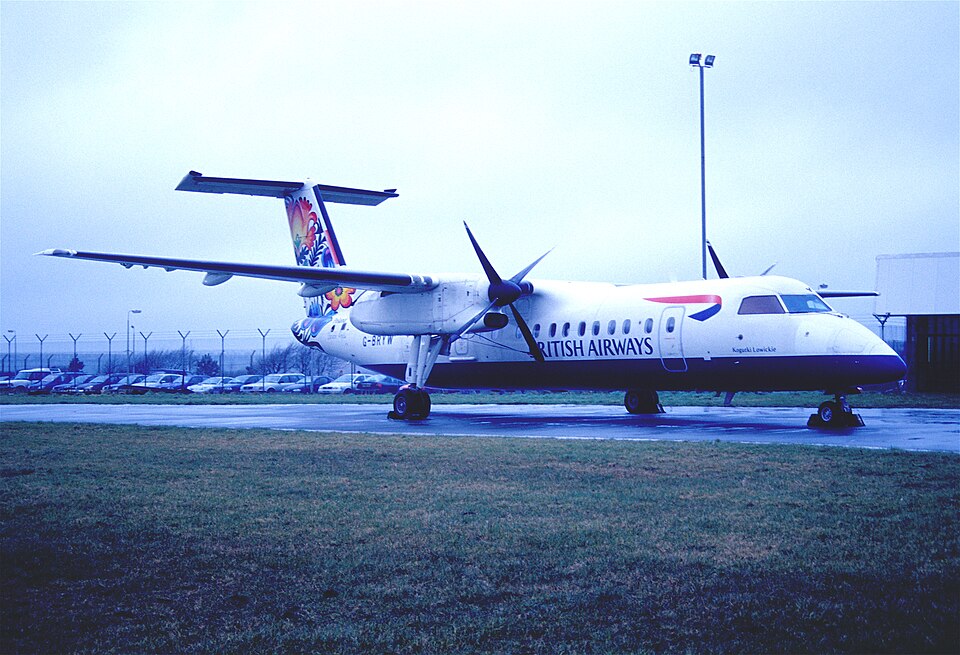
Flight Details
A DHC-8-311 Dash 8, registration G-BRYW, was operating a public transport flight with 4 crew and 24 passengers. The aircraft, manufactured in 1997, was powered by two Pratt & Whitney P123 turboprop engines. The commander, aged 40, held an Airline Transport Pilot's Licence and had 6,200 total flying hours, including 62 hours on type. The flight occurred on 28 October 2003 at 1500 UTC, approximately 15 miles south of Aberdeen, Scotland.
The Incident
The aircraft was being radar vectored for an approach to Runway 34 at Aberdeen, with a speed control of 230 kt. During the descent, the crew had intermittent visual contact with the ground, and the weather radar was switched off. The seat belt sign had been turned on, and the cabin crew had received the '10 minutes to landing' warning, but the cabin was not confirmed as secure. While turning onto base leg and descending through 7,000 feet, the aircraft entered cloud and was shaken by a significant jolt. Shortly afterward, further turbulence was encountered, and the overspeed warning horn sounded. The commander reduced the power, but the overspeed warning sounded again. He then increased the propeller RPM to slow the aircraft. Thirty seconds later, the aircraft exited the cloudbank and landed without further incident.
Aftermath
After landing, two members of the cabin crew, who reported minor injuries as a result of the turbulence, attended hospital. No damage to the aircraft was reported. The UK low-level weather forecast for the area valid at the time had suggested the possibility of moderate turbulence associated with cloud.