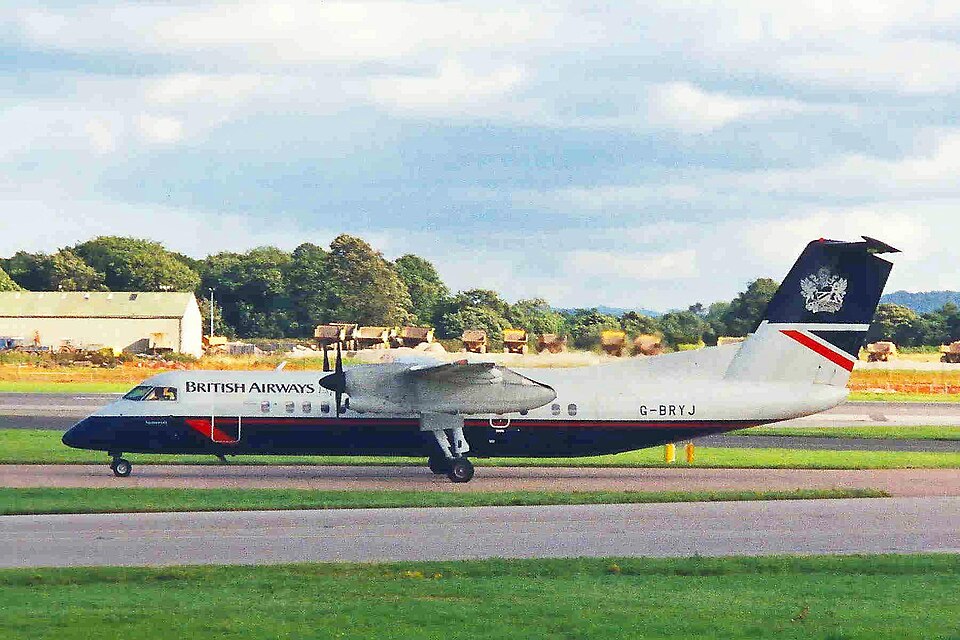
Synopsis
On 30 December 2001 at 1540 UTC, a De Havilland Canada DHC-8-311, registration G-BRYJ, was struck by lightning while operating a public transport flight west of Aberdeen Airport. The aircraft had departed Aberdeen Airport's Runway 34 at 1529 hours, shortly before sunset. There were 4 crew and 45 passengers on board; no injuries were reported.
Flight Details
The flight was under the command of a 31-year-old pilot holding an Airline Transport Pilots Licence with 2,200 hours total flying experience, of which 1,500 hours were on type. The aircraft, built in 1991, was powered by two Pratt & Whitney Canada PW-123 turboprop engines.
Weather Conditions
At the time of departure, the aerodrome weather was wind 330° at 12 knots, visibility 4,000 metres in light snow, air temperature +1°C, with a few cumulonimbus clouds reported with a base of 1,500 feet.
Sequence of Events
Following departure, the aircraft was initially radar vectored to the north-west and then to the west. As it climbed through flight level 80 (approximately 8,000 feet amsl), it was cleared to resume its own navigation. Shortly thereafter, the aircraft was struck by lightning. The strike caused both engine-driven DC generators to trip off-line. The flight crew immediately informed air traffic control of the lightning strike, levelled the aircraft, and flew clear of the weather. They then performed the checklist detailed in the Quick Reference Handbook (QRH), which successfully re-instated both DC generators. A PAN emergency was declared, and the aircraft returned to Aberdeen, where a normal instrument approach and landing were carried out.
Damage and Repairs
Examination by the operator’s maintenance organisation revealed lightning damage to the radome and both flight deck windscreens, all of which required replacement. Burn marks were found on the upper fuselage and left horizontal stabiliser, which required repair in accordance with a manufacturer’s repair scheme.
Probable Cause
Not stated.