Introduction
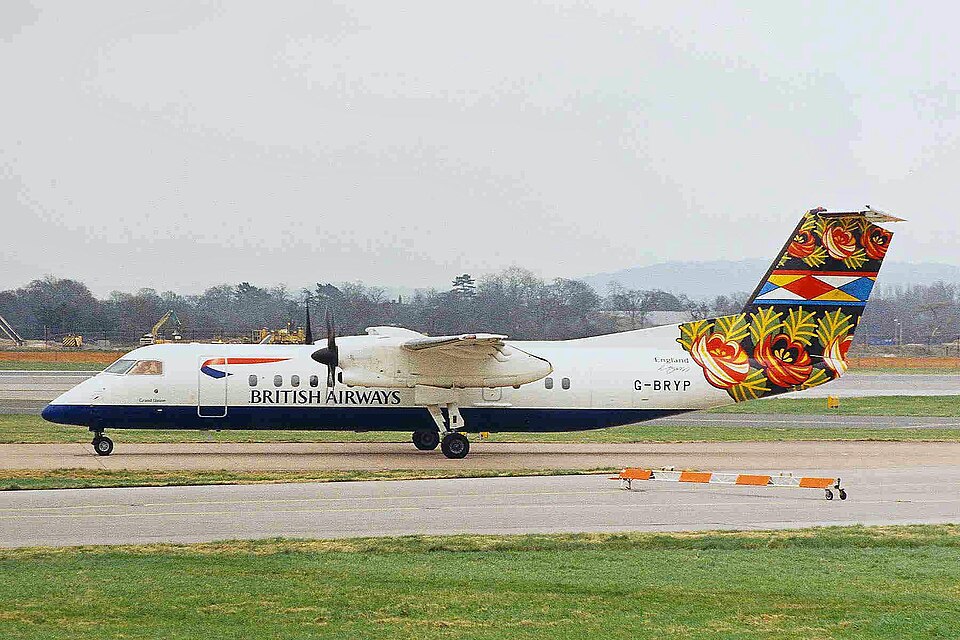
On 12 August 1999, at 0610 UTC, a DHC-8-311 (registration G-BRYP) operated a scheduled passenger service from Manchester International Airport. The aircraft had been parked overnight with a routine pre-flight engineering inspection. That inspection, conducted the previous evening after arrival, showed hydraulic fluid contents above minimum dispatch quantities.
The flight crew reported at 0505 hrs for a flight to Glasgow. During the external pre-flight inspection, the first officer noted the No 1 hydraulic system remote quantity indicator was below the minimum dispatch level (1.5 US quarts, 1.41 litres). The commander checked the flight deck gauge, which indicated a slightly higher level, and decided to transfer fluid from the No 2 system during the flight. They also discussed an illuminated but dim nose landing gear alternate extension indicator light with Line Maintenance Control and agreed to dispatch.
Sequence of Events
Passengers boarded, and the aircraft received ATC clearance to push back. Both engines were started on stand per standard procedures. The commander communicated with the ground engineer via headset. About 15 seconds after brake release, he informed the engineer he would perform a fluid transfer at the end of the pushback, requesting the tug remain attached. The engineer relayed this to the tug driver, who halted the tug. The aircraft had moved only a few feet from its parking position. The engineer returned and said, "all right, no problem."
Upon hearing this, the commander instructed the first officer to monitor the transfer direction. The commander did not notice the pushback resume gently. The first officer, having just completed paperwork, looked up and realized the pushback had restarted. He tried to warn the commander just as the commander applied the Emergency/Parking Brake to begin the fluid transfer. The tug continued pushing, causing the nose landing gear to collapse. Hydraulic fluid sprayed from the nose gear area; the engineer later required treatment for skin and eye contamination.
After the collapse, several seconds passed before the first officer prompted the commander to shut down engines and make a passenger address. The commander shut down the engines and coordinated a precautionary disembarkation via the normal passenger door. No occupants were injured.
Engineering Investigation
The nose landing gear collapse resulted in the nose settling onto the wheels via direct tyre contact. The 'A' frame upper drag link pulled out of its trunnions, allowing the gear to rotate rearwards, damaging the nosewheel bay and adjacent fuselage. Propellers did not contact the ground. The aircraft was lifted onto a steerable trolley with airbags and strops for towing to a hangar; tight turns caused minor additional damage.
Inspection of the nose landing gear showed that the upper drag strut trunnions had pulled out of their housings due to very high loads, consistent with high pushback forces. Damage was broadly symmetrical but more pronounced on the left side, suggesting the right trunnion released first. Considerable structural distortion extended outside the bay.
The tug and towbar were impounded. The tug, a large model specified for DC10-sized aircraft (weighing 32,600 kg), failed a safety inspection on six counts (brakes, stop lamps, washers, instrument illumination), but none were relevant. The towbar had three shear bolts that sheared; in compression, the sections telescoped, and after full compression, compressive load resumed without limitation.
Aircraft Systems Background
The DHC Dash 8 has two hydraulic systems. No 1 powers the normal brakes; No 2 powers the Emergency/Parking Brake system. Fluid can be transferred between systems by sequencing brake application and release. The manual describes the process: depresing pedals, applying parking brake, releasing pedals, then releasing parking brake. Dispatch is not permitted if fluid quantities are below limits. Quantity indications are available on the nacelle and flight deck; flight deck indications require electrical power.
In August 1992, DHC issued Service Letter DH8-SL-29-002 on inadvertent hydraulic fluid transfer, describing sequences that cause transfer and advising operators to inform crews. The operator published Flight Crew Notice 39/97, specifying that fluid transfer should be conducted after arrival on a level stand, engines running, condition levers at feather, with chocks inserted.
Operator Actions
After the accident, a qualitative assessment revealed that hydraulic fluid transfer was being performed not only under the specified conditions but also during taxi or at the end of pushbacks. The involved crew indicated this was not uncommon. The event prompted review of procedures.