Introduction
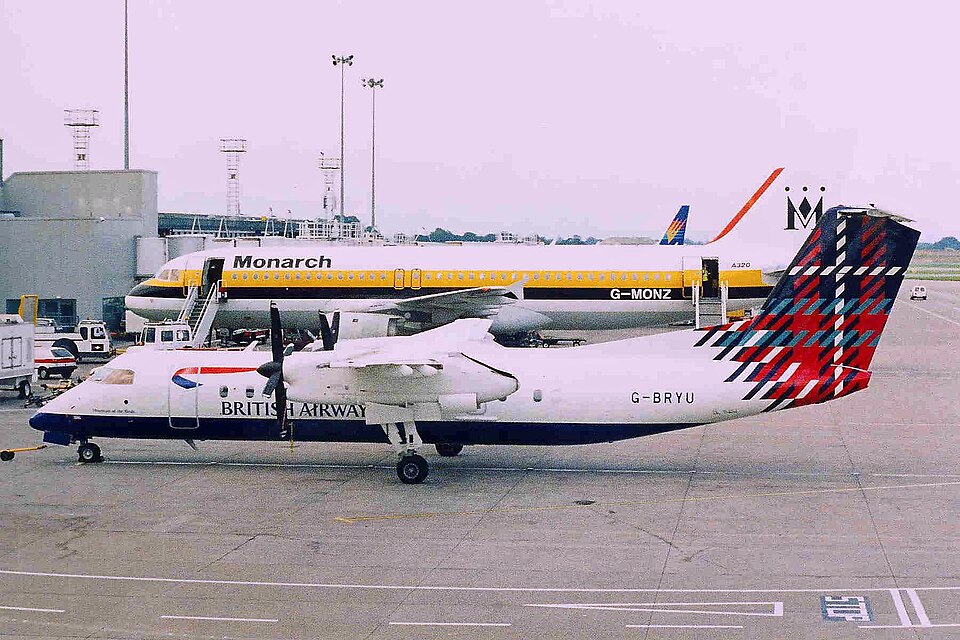
On 21 December 2004 at 0723 hrs, a DHC-8-311 aircraft, registration G-BRYU, encountered abnormally high pitch control forces during the takeoff roll at Edinburgh, Scotland. The aircraft, operated as a public transport passenger flight, had 4 crew and 49 passengers on board. No injuries were sustained and no damage occurred.
History of the Flight
The flight was scheduled from Edinburgh to Manchester. The aircraft's mass was 18,186 kg, close to the maximum take-off mass of 19,000 kg, with a forward centre of gravity due to a full passenger load and light baggage. Pitch trim was set near the aft limit of the take-off range.
De-icing with Type II 75/25 fluid had been performed at 0400 hrs to remove hoar frost, with a planned departure at 0700 hrs. Minimum OAT was -2°C, maximum -1°C, with clear conditions and no precipitation. The holdover time was five hours. A pre-departure inspection confirmed de-icing fluid on all visible surfaces, with an excessive amount noted on the fuselage.
During the take-off roll at 0723 hrs, the handling commander found pitch control forces at VR (109 knots) extremely high, initially attributed to the forward CG and high mass. Continued back pressure seemed ineffective, leading to an extended take-off roll. The commander considered rejecting takeoff above VR, suspecting elevator jam. A slow rotation was achieved with sustained back pressure. Once airborne, the commander exercised pitch controls and forces returned to normal. Further checks during climb and cruise showed no recurrence. The flight continued to Manchester for an uneventful landing.
A static full and free control check after landing was normal. Post-flight examination showed de-icing fluid on the forward tailplane, while the aft section, elevator hinges, and spring tabs were completely dry.
Discussion
The commander noted that control forces were far beyond normal experience on type, with no aerodynamic assistance, suggesting elevator spring tab jamming or freezing. This is supported by the return of normal forces in climb.
Previous incidents have attributed similar abnormal forces to frozen spring tabs from rehydrated de-icing fluid residues. A serious incident (AAIB Bulletin 12/2003) led to Safety Recommendations 2003-81 and 2003-82 regarding cleaning of quiet areas and development of non-rehydratable fluids. The CAA accepted these recommendations.
For G-BRYU, two possibilities exist: spring tabs froze overnight and remained frozen despite de-icing, or rehydrated residues froze after de-icing. The aircraft manufacturer issued AOM 784 and 784A for Dash 8 series 100, 200, and 300, citing spring tab restriction from frozen rehydrated de-icing fluid residue, recommending periodic washing of quiet areas.
Probable Cause
The AAIB determined the probable cause as frozen spring tabs, either from incomplete de-icing before flight or rehydration of de-icing fluid residue.