Introduction
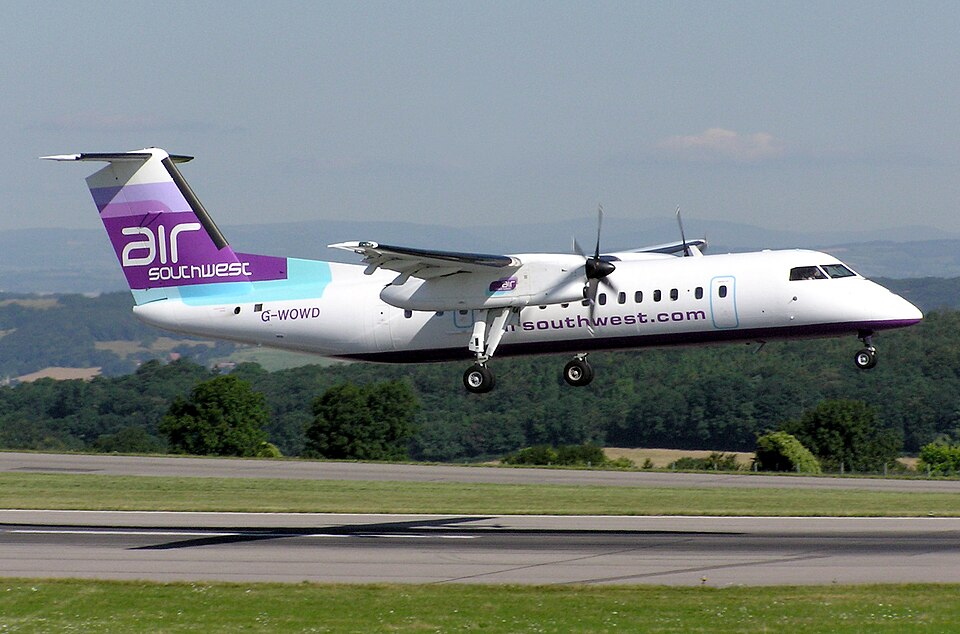
On 13 December 2006, at approximately 1450 UTC, a Bombardier DHC-8-311, registration G-WOWD, experienced the loss of a main wheel shortly after takeoff from St Mawgan, Cornwall. The aircraft was on a commercial air transport passenger flight with 4 crew and 33 passengers aboard. No injuries were reported, and damage was limited to the right inboard main wheel and associated axle.
History of the Flight
Immediately after takeoff, air traffic control informed the flight crew that a main wheel had fallen from the aircraft. The crew reported that the takeoff had appeared normal, with no unusual noises or vibrations detected by either the flight or cabin crew. A fly-by of the ATC tower confirmed that the right inboard main wheel was missing. After consulting with their company, the crew briefed the cabin for an emergency landing back at St Mawgan. The landing was uneventful, and the aircraft stopped on a taxiway where passengers disembarked as a precaution before the aircraft was towed to a stand. Company engineers found no damage beyond the main landing gear stub axle.
Technical Examination
The main wheel and fragments of the retaining nut and wheel bearing were recovered from the runway. The wheel and axle showed rotational damage consistent with failure of the retaining nut or bearing. Metallurgical examination of the retaining nut fragments indicated very high loads on the inner face leading to failure. Only a small number of bearing fragments were found—one roller with heavy smearing and heavily distorted cage fragments. The fracture surfaces were indistinct due to secondary damage. There was insufficient evidence to identify the primary failure mode of the bearing.
The wheel had been fitted to the aircraft on 19 November 2006 and had operated for 199 landings. Before installation, the wheel assembly had been cleaned, inspected, and reassembled by a maintenance facility during a tire replacement, following the manufacturer's Component Maintenance Manual. No defects were noted.
The aircraft manufacturer reported several other main wheel losses attributable to bearing failures, with no single cause identified. Factors that may contribute include brake dust accumulation, incorrect installation procedures, and inadequate grease filling. The manufacturer approved two new greases and, for adverse operational conditions, recommends replacing wheel bearings at every wheel change. The manufacturer continues to monitor wheel bearings in service.
Conclusion
The loss of the main wheel was the result of a failure of the wheel bearing. The small amount of bearing material recovered and the severity of damage prevented confirmation of the failure mode. Prior to installation, the bearing had been inspected and re-greased per manufacturer requirements. The manufacturer has introduced measures to improve bearing performance and will take additional steps as needed. No further safety action was considered necessary.