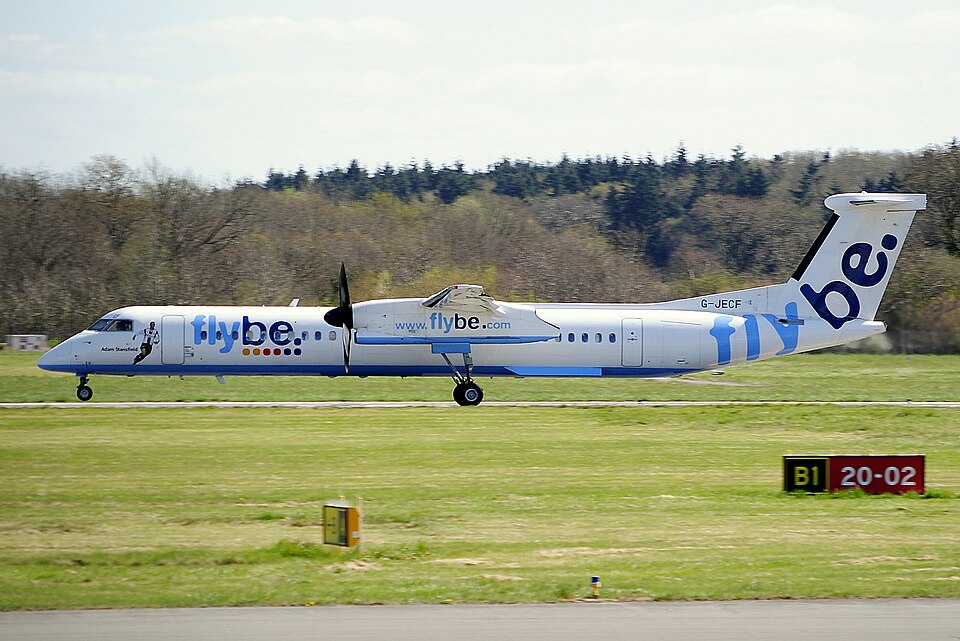
History of the Flight
On 11 September 2010, a DHC-8-402 Dash 8, registration G-JECF, was operating a commercial passenger flight from Bergerac to Exeter Airport. The crew, consisting of a commander (44 years, 3,050 hours total, 1,560 on type) and three other crew members, had flown three earlier sectors without incident. The aircraft departed Bergerac at 1727 hrs for the final sector, with the commander as the handling pilot.
During the approach to Exeter, air traffic control cleared the aircraft to descend to 2,600 ft, the sector minimum safe altitude, and provided radar vectors for an ILS approach to Runway 26. The autopilot was engaged, the flight director approach mode was armed, and the aircraft was descending in vertical speed mode.
IOP Failure and Crew Response
Passing approximately 3,300 ft, the crew noticed the IOP 1 FAIL annunciator illuminated on the engine display. The commander’s speed bugs and minimum descent altitude indication on his primary flight display (PFD) were replaced by white dashes, while the co-pilot’s PFD remained normal. The commander switched the air data computer (ADC) source selector from NORM to ADC 2, but seeing no effect, reselected NORM. This action disarmed the approach mode, which the commander then re-armed. Lacking speed bug information, he handed control to the co-pilot for landing. The horizontal situation indicator selector remained selected to the commander’s side.
Shortly after the co-pilot took control, a GPWS 'caution terrain' alert sounded. Both pilots had been focused on resolving the IOP failure. Within seconds, a GPWS 'terrain terrain, pull up' warning activated. The co-pilot disengaged the autopilot, advanced power levers to about 80%, and climbed at approximately five degrees pitch. The aircraft climbed to 2,200 ft and captured the glideslope, landing without further incident at 1851 hrs.
Investigation Findings
Flight data recorder analysis showed that the altitude select mode had disengaged when the ADC was switched, causing the aircraft to descend below the selected altitude. The minimum altitude recorded was 1,417 ft amsl (700 ft agl) at 8 nm from touchdown. The GPWS warning occurred while the aircraft was ¾ dot below the glideslope.
The IOP 1 failure was traced to intermittent electrical contact from cracked solder on two pins of a transformer on the IOP power supply module. The aircraft had a previous IOP 1 failure entry on 22 August 2010, but maintenance troubleshooting found no fault codes and the aircraft was returned to service.
The investigation further determined that there was a lack of appropriate operational guidance available to flight crews for dealing with such avionics failures. Three Safety Recommendations were made.