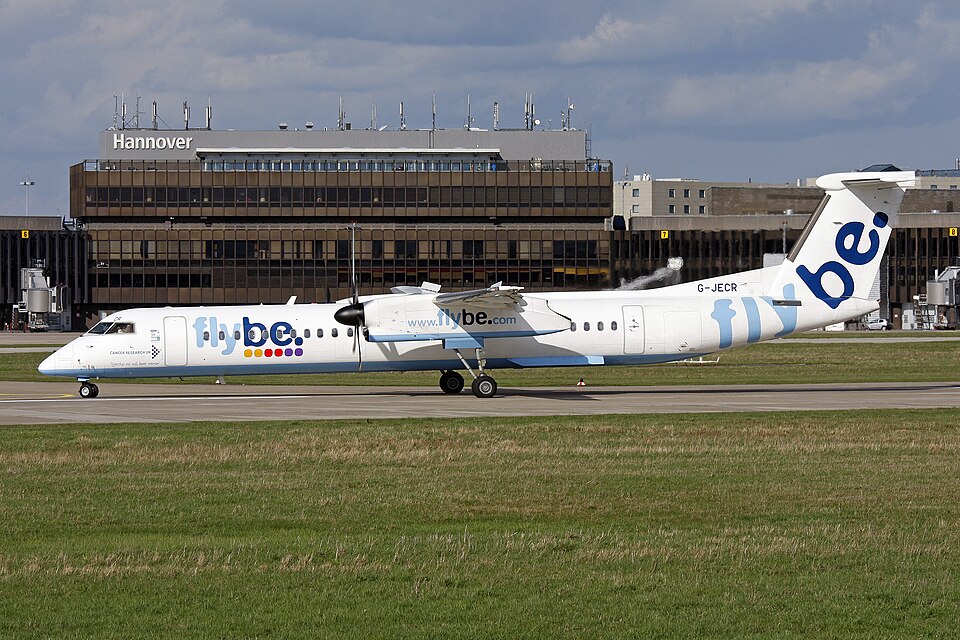
History of the Flight
The aircraft, a DHC-8-402 Dash 8 registered G-JECR, was on its first flight of the day, scheduled to depart for London Gatwick Airport. The flight crew had completed before-start preparations and received clearance from ATC to push back off their parking stand and start the engines. The ground crew consisted of a tug driver, who acted as supervisor and wore a cordless headset, and a ground crewman wearing ear defenders who was tasked with disconnecting the tow bar.
After the commander confirmed the brakes were released, the tug driver commenced the pushback. The ground crewman positioned himself on the right side of the aircraft. Normally, engines are started during pushback, but due to an early push, the commander planned to park in a waiting area with the APU running and start engines nearer departure time.
As the aircraft approached the end of the pushback, ATC informed the commander that there would be no departure delay. The aircraft stopped, and the commander set the parking brake as instructed by the tug driver. After confirming the brakes were set, the commander cleared the ground crew to disconnect the tow bar.
The commander then received permission from the ground crew supervisor and instructed the co-pilot to start the right engine. The ground crewman knelt beneath the nose to remove the tow bar. When the right engine started, it pressurized the No. 2 hydraulic system, causing the forward nosewheel undercarriage doors to close. The closing doors caught the ground crewman by his right upper arm and chest. He grasped the right door with his left hand to prevent further closure.
The tug driver saw the predicament and instructed the flight crew to stop the right engine, but his call was not heard. However, the commander noticed the nose landing gear door amber caption was still illuminated and asked for confirmation. Realizing the ground crewman was trapped, the commander shut down the right engine, pulled the landing gear door release handle, and exercised the elevator to dissipate hydraulic pressure. The ground crewman freed himself with help from his colleague and was taken to hospital with minor injuries.
First Flight of the Day
Before the first flight, the operator's engineering department inspects the nose landing gear bay. During this inspection, the two forward nosewheel doors are opened fully and remain open until the right engine is started. The landing gear and doors are operated by the No. 2 hydraulic system, powered by the right engine. Starting the right engine pressurizes the system and closes the doors.
Safety Action
Following an initial investigation, the ground handling agent issued a Memorandum on 3 September 2009 instructing staff to ensure the nose wheel undercarriage doors are fully closed before disconnecting the tow bar on any Dash 8 Q400 aircraft. The aircraft operator issued Ground Services Bulletin No. 33 on 7 September 2009, emphasizing that ground operators must verify the forward nose wheel undercarriage doors are fully closed before disconnecting the tow bar. The bulletin also stated that during engine start, hydraulic pressure closes the doors automatically, and the nose wheel bay area must be clear. If doors do not close, the Captain must be informed. The bulletin included photographs illustrating the doors in closed and open positions.