Introduction
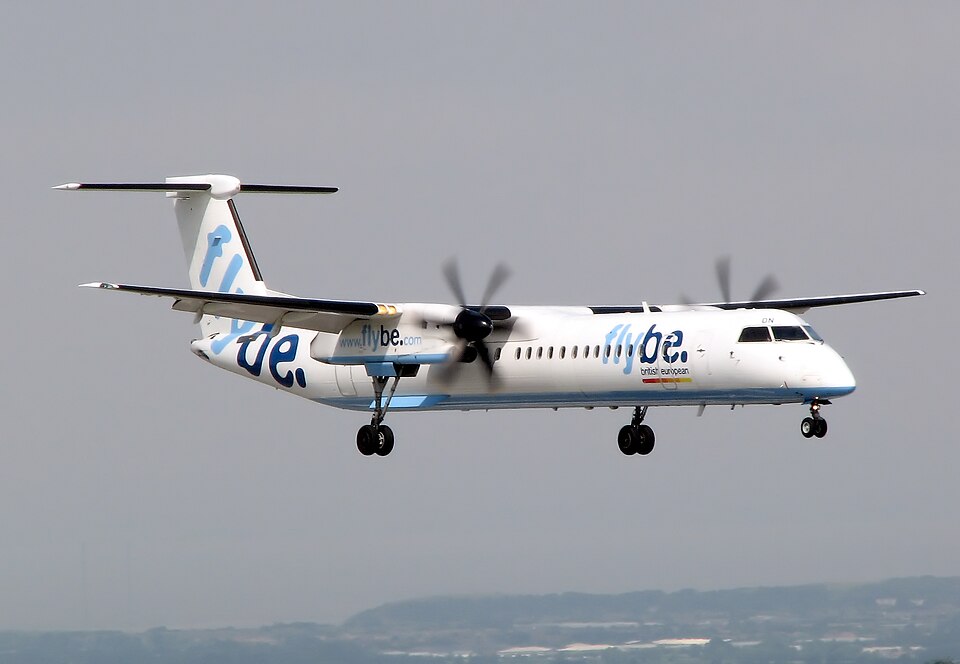
On 22 April 2010, a DHC-8-402 Dash 8 turboprop aircraft, registration G-JEDN, experienced the detachment of the No 2 engine inboard forward access door during the takeoff roll at Southampton Airport, Hampshire. The aircraft was operating a commercial air transport flight with four crew and 40 passengers on board. No injuries were reported. The right wing leading edge sustained damage.
History of the Flight
The aircraft had been parked overnight at Southampton. The flight crew arrived approximately 40 minutes before the scheduled departure time of 0545 hrs UTC. The commander removed the engine blanks and stowed them in the forward hold before beginning a walk-around inspection, moving clockwise from the forward passenger door. The sun had risen at 0457 hrs, and although low in the sky, the commander stated conditions were light enough to carry out the inspection without a torch. He reported checking that all engine panels were secure, inspecting each engine from the front and both sides.
After the walk-around, the commander noted a very small amount of melting frost on the aircraft and ordered deicing. Passengers embarked, and the aircraft was deiced. The deicing crew and a ground crew member moved around the aircraft but identified no abnormalities. The aircraft was pushed back and departed.
During the takeoff roll, a pilot sitting in a parked aircraft saw a panel thrown upwards from G-JEDN and reported this to air traffic control (ATC), who informed the flight crew. The flight crew were not otherwise aware of anything unusual, as the aircraft behaved normally. ATC advised that a panel and other debris had been found on the airfield. The commander decided to return to Southampton, and the aircraft landed without further incident.
Engineering Examination
The No 2 engine inboard forward access door was found by airport staff in the grass area approximately halfway along and to the east of the runway. The door had two centre latches closed and locked, but the two lower latches were fully open. Grass and dirt were embedded within the lever mechanism of the lower latches, indicating they were in the open position when the door impacted the ground. Examination of the latch pin receivers in the nacelle structure showed no evidence of the pins having been forced out of their locked positions. All four quick-release positive-lock pin latches were serviceable and showed no evidence of engagement immediately prior to the door becoming detached.
Engine bay access doors on the DHC-8-402 are made from carbon/epoxy composite material with integral foam-filled stiffening ribs. Each door is hinged at the top and held closed by four quick-release positive-lock pin latches. The inside of each latch is coloured Day-Glow orange. The No 2 engine forward inboard access door provides access to service the engine oil system.
The aircraft had been parked overnight at Southampton, where a Daily Check and an unscheduled maintenance task were carried out during the night. The Daily Check included a task to check engine oil quantities, which required opening the No 2 engine forward inboard access door. Evidence suggested that this door had not been fully latched following the maintenance work.
Safety Action
Following this event, the operator launched a safety campaign to highlight to aircrew, engineering, and ground staff the importance of securing and checking engine access doors on all its aircraft types.