Synopsis
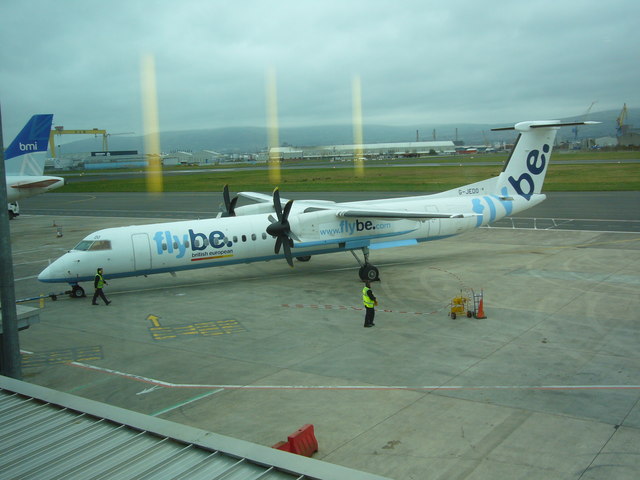
On 30 November 2010, a DHC-8-402 Dash 8 aircraft, registration G-JEDR, experienced a tail strike while landing at Bournemouth Airport, Dorset. The aircraft was conducting a flap 0° approach due to a flap system malfunction. The pilot increased the pitch attitude to control the rate of descent, causing the aft lower fuselage to strike the runway. The frangible touch runway detection switch was broken. No injuries were reported among the four crew or 69 passengers. The UK Air Accidents Investigation Branch (AAIB) issued one Safety Recommendation.
History of the Flight
The aircraft was initially conducting a VOR approach to Southampton Airport in icing conditions. When the first stage of flap was selected, the amber FLAP POWER caution illuminated on the Caution and Warning Panel (CWP) and the flaps remained up. The crew determined that the runway at Southampton was insufficient for a flap 0° approach in icing conditions and decided to divert to Bournemouth Airport for an ILS approach to Runway 08. The weather at Bournemouth included wind from 050° at 10 kt, visibility 10 km, broken cloud at 1,500 ft above aerodrome level, and a temperature of 1°C.
Seven miles from touchdown, the landing gear was down, speed stabilised at a Vref of 150 kt IAS, and pitch attitude was 5° nose-up. At 1,000 ft above aerodrome level, the commander disconnected the autopilot and flew manually in accordance with the Emergency Check List (ECL). Within approximately 2 nm of the runway, the co-pilot began calling out pitch attitude. As the aircraft neared the touchdown point, the commander perceived a high rate of descent and increased pitch attitude. The co-pilot called, “Pitch 8°, don’t pitch any more.” A Master Warning triggered, and the ‘touched runway’ caption illuminated on the CWP. The aircraft vacated the runway and taxied to a parking stand, where a normal shutdown was performed. Inspection revealed the broken frangible switch.
Comments from the Commander
The commander stated that, although aware of the ECL requirement to avoid pitch attitudes above 6° at touchdown, he found the temptation to flare the aircraft to reduce the rate of descent overwhelming. He also thought the ECL advice to gradually reduce power to achieve flight idle at touchdown might have contributed to the high rate of descent. Additionally, he reported that the wind dropped significantly as the aircraft approached the runway, an assessment later confirmed by the operator through flight data analysis, which may have introduced windshear in the final approach stages.
Operator’s Investigation
The operator’s investigation, including crew interviews and flight data analysis, highlighted anomalies in company manuals. The ECL for abnormal flap landings instructed pilots to ‘Reduce power gradually to achieve flt idle at touchdown.’ The Operations Manual Part B4 stated: ‘Power should be reduced to flt idle at touchdown and the nose-wheel promptly lowered to the ground.’ The Airplane Flight Manual (AFM) stated: ‘Power should be reduced gradually to achieve flt idle at or just prior to touchdown.’ All documents cautioned against pitch attitudes exceeding 6° at touchdown. Flight data indicated the commander began reducing power to flight idle when the aircraft was below approximately 30 ft above ground level.
Discussion with the Manufacturer
Bombardier Aerospace, the manufacturer, clarified that with the correct Vref, the power levers are intended to be selected to flight idle immediately prior to main wheel touchdown. For abnormal flap landings, power levers are put to flight idle ‘at’ touchdown, rather than ‘just prior to’. The manufacturer stated that the pitch attitude for a flap 0° or 5° landing, when stabilised at the correct Vref, is between 5° and 6°, indicating that a flare is not possible and power should be maintained until main wheel contact, followed by promptly lowering the nosewheel. The manufacturer considered that the AFM contains adequate information and that the appropriate pilot action required application of power coincidental with lowering the pitch attitude to the allowed 6°.
Rate of Descent and Analysis
A typical approach with a Vref of 120 kt in a 10 kt headwind requires a rate of descent of 582 ft/min to maintain a 3° glidepath. During the incident approach, groundspeed varied between 131 and 139 kt, requiring a rate of descent of 720 ft/min (a 24% increase). Between 300 and 100 ft agl, the rate of descent was 700–800 ft/min, increasing to 1,000 ft/min at 30 ft agl, then reducing to 200 ft/min at touchdown. This reduction corresponded to an increase in pitch attitude from 6° to 9° nose-up. Power levers were retarded slightly after 100 ft and to idle below 30 ft. The operator required pilots to practice flap 0° approaches in the simulator only once every three years. The AAIB analysis noted that the rate of descent for a flap 0° approach is significantly higher than for a normal approach, and the pilot’s perception of a high rate of descent might be expected. The reduction in power in accordance with the ECL likely increased the rate of descent, and the subsequent increase in pitch attitude led to the tail strike.
Safety Recommendation
Safety Recommendation 2011-081: The AAIB recommended that Bombardier Aerospace amend the DHC-8-402 Dash 8 emergency checklist section concerning abnormal flap landings to reflect their advice that power will be maintained until main wheel contact.