History of the Flight
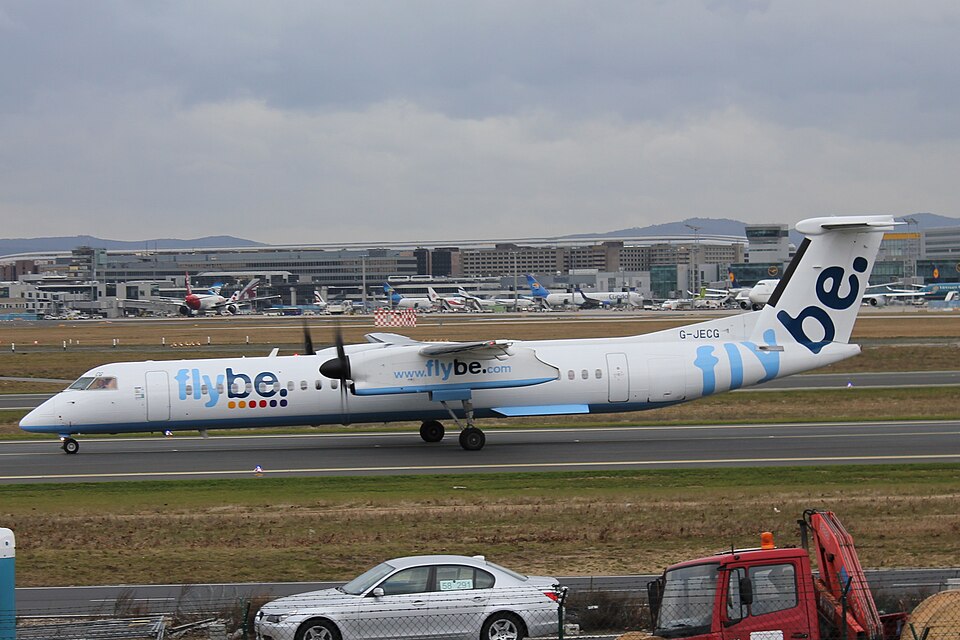
The aircraft, a DHC-8-402 registered G-JECG, was operating a scheduled passenger flight from Edinburgh Airport to Belfast City Airport on 10 December 2006. The crew consisted of four members, with 71 passengers on board. The incident occurred during the third sector of the day. The flight crew reported for duty at 1515 hrs. Weather forecasts indicated extensive cloud and in-flight icing, though surface temperatures were above freezing.
The first two flights were uneventful. During the 35-minute turnaround at Edinburgh, the co-pilot conducted an external inspection, including the pitot/static probes and angle of attack sensors, and found no anomalies. The temperature was 12°C with continual drizzle.
After boarding, the aircraft taxied for departure from Runway 24. During taxi, the co-pilot noted that an expected annunciation on the Engine Display was absent, prompting a check. The propeller condition levers were found incorrectly set for takeoff; the issue was rectified. The commander then called for the taxi checklist. The crew received takeoff clearance before reaching the holding point, and takeoff commenced at 1913 hrs.
Precipitation was encountered about 1,000 ft after takeoff; propeller anti-ice was selected on, and the autopilot was engaged. The crew climbed to FL160. Heavy precipitation continued, and airframe ice was observed, prompting activation of the airframe icing protection system. The automatic ice detection system activated at about 12,200 ft.
As the aircraft approached FL160, an altitude mismatch alert appeared. The commander's primary flight display (PFD) indicated an altitude approximately 150 ft lower than the co-pilot's. After leveling at FL160, further discrepancies in altitude and airspeed occurred. The autopilot disconnected automatically. The commander's airspeed and altitude indications failed; he selected the right-hand instrument source to restore his display. Air traffic control noted the loss of Mode C altitude data and queried the crew. The commander requested an immediate descent to clear the icing layer.
During descent, indications fluctuated but later recovered. After leveling at FL80, the crew discussed the pitot/static probe heat switches. The co-pilot suggested they might be off. Flight data recorder (FDR) information showed the standby pitot/static probe heat switch was moved from OFF to ON about three minutes after leveling at FL80, having been off since the start of the recording. The aircraft landed at Belfast at approximately 1950 hrs without further incident. No injuries or damage were reported.
Meteorological Information
A broad warm sector covered the Edinburgh area at 1800 hrs, with extensive layer cloud. Strong winds were present. Upper air soundings indicated the freezing level at about 8,500 ft and the -5°C level at about 12,500 ft. There was likely layered cloud up to 12,000 ft and possibly higher. Surface temperature at Edinburgh was 12°C, so icing conditions were not expected at takeoff.
Recorded Information
The FDR recorded over 26 hours of operation. The cockpit voice recorder data for the incident flight was overwritten. Engine start occurred at 1902 hrs. Prior to taxi, the condition levers were advanced from start/feather to 900 rpm, then to 1020 rpm. Analysis of previous flights showed that the condition levers were often advanced directly from start/feather to max without an intermediate stop.
FDR data showed that as the aircraft passed 12,200 ft, the ice detection system activated, with static air temperature at -3°C. About 20 seconds later, the left and right air data computer altitudes began to diverge, reaching a difference of 218 ft. The altitude mismatch alert threshold was 123 ft. At FL160, the difference reduced to 50 ft, but further instrument failures occurred later. The FDR confirmed that the standby pitot/static probe heat switch was off during the climb and was not turned on until after the descent to FL80.