Accident Overview
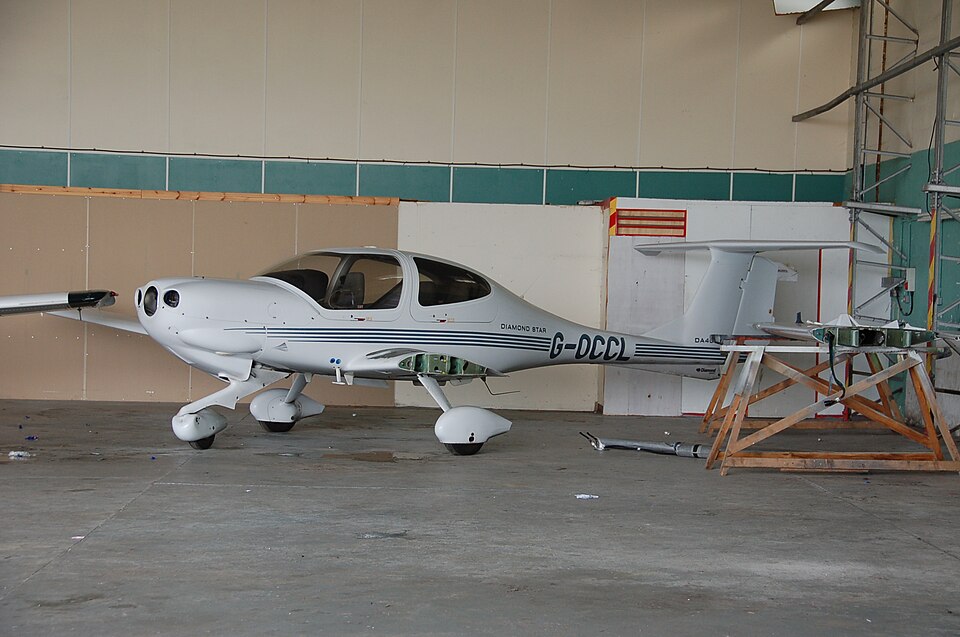
On 16 December 2012, at 0950 hrs, a Diamond Aircraft DA 40 D Diamond Star (registration G-OCCL) was involved in a taxi collision at Wolverhampton (Halfpenny Green) Airport. The aircraft, powered by a single Thielert TAE 125-02-99 piston engine and manufactured in 2006, was engaged in a training flight with a flying instructor and a student on board. There were no passengers. The commander, a 59-year-old holder of a Commercial Pilot’s Licence, had accumulated 4,015 flying hours, including 172 on type, with 24 hours in the last 90 days and 6 hours in the last 28 days.
Sequence of Events
The aircraft had been hangared overnight and was pulled outside before the instructor’s arrival at 0910 hrs. The air temperature was 2°C. After completing the daily inspection and briefing the student, they boarded. With the engine running, air was directed to the windscreen but demisting was slow. The instructor cleared the inside of the screen with his glove and also reached through the direct vision window to clear moisture from the outside immediately in front of him.
Taxi and Collision
The student began taxiing toward the fuel bay, following a route that involved a section of taxiway, then a right turn followed by a left turn into the bay, between a fuel bowser and a fire service vehicle. As the aircraft emerged from a hangar’s shadow, the student reported difficulty seeing (the route was into a low sun). The instructor, able to see ahead, took control. As they approached the fuel pumps, the sun was directly ahead and visibility was poor, especially to the left. The instructor failed to see a light helicopter already parked at the fuel bay for refuelling. The aircraft collided with the helicopter’s tail at low speed. The instructor shut down the engine, secured the aircraft, and both occupants evacuated. The unoccupied helicopter sustained damage to its tail and tail rotor system. The DA 40 suffered destruction of its propeller and probable damage to its clutch and gearbox.
Reported Causes
The instructor reported that the primary cause was his failure to clear the windscreen thoroughly. He considered that contributory causes were the low sun directly ahead and the distraction of navigating the narrow space between the fuel bowser and fire vehicle.