History of the Flight
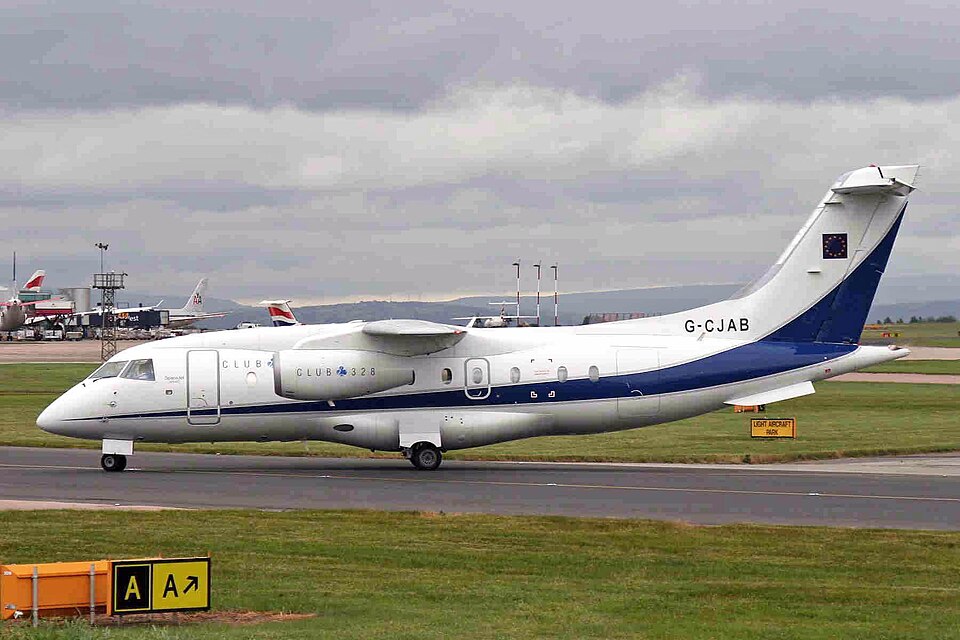
On 3 March 2009, a Dornier 328-300, registration G-CJAB, departed Biggin Hill Airfield at 1610 UTC on a non-revenue ferry flight to Southampton Airport. The aircraft was crewed by two pilots with no passengers. Approximately 20 minutes after departure, while cruising at FL080 in Instrument Meteorological Conditions (IMC), the Multi-Function Display (MFD) 1 failed. Over the next 15 minutes, all five cockpit display screens failed sequentially: later MFD 2 failed, then Primary Flight Display (PFD) 2, then during the localiser intercept for Runway 20, PFD 1 failed, and finally on short final the Engine Indication and Crew Alerting System (EICAS) screen failed. The crew completed the abnormal procedures checklist section 9-1 and executed an uneventful ILS landing using standby instruments. No injuries were reported and no damage occurred.
Aircraft History
The aircraft had been removed from service approximately one year earlier due to airframe damage to the tail section, which had been repaired successfully. Since the repair, the aircraft had flown only about three hours and was stored in a hangar. The owners did not follow the Approved Maintenance Manual requirements for long-term storage but kept the aircraft in operational readiness with regular engine ground runs and routine continuing airworthiness maintenance.
Engineering Findings
Post-landing troubleshooting confirmed that all five display units (DU-870, part number 7014300-902) had failed completely. No other aircraft defects were identified. Replacement units functioned without recurrence. The failed units were sent to the manufacturer for detailed examination. Strip examinations determined that the High Voltage Power Supply (HVPS) unit in each display had failed due to a failed transformer (SMI-20-04). The epoxy encapsulation around the secondary winding had broken down, likely due to overheating, causing a short-circuit. The failed transformers were of an obsolete standard (pre-modification J, K, L, or N). None of the five units had been returned for overhaul or modification since original installation.
Aircraft equipment cooling system inspection revealed no abnormalities. Cockpit ambient air cools the display units via a fan; the manufacturer recommends an ambient temperature not exceeding 40°C to keep display units below 55°C. It is possible to switch off the fan, but no evidence indicated the fan was off during the flight. An amber EICAS caption would appear if the fan failed in normal operation.
Other Incidents and Further Work
Three similar events involving loss of displays on the ground had been reported for this aircraft type, all after extended periods without airborne operation. The aircraft manufacturer drafted a service bulletin recommending that at least four of five display units be modified to at least 'J' standard, or a 'K' standard or above unit be fitted. EASA considered mandating relevant service bulletins. Investigations into the effect of extended ground maintenance or inactivity on display units were ongoing.
Conclusion
The investigation could not determine a common trigger mechanism for the overheating and failure, given the short interval between failures and the lack of abnormal cockpit temperatures in the UK climate. The issue was to be monitored by EASA.