Flight and Initial Events
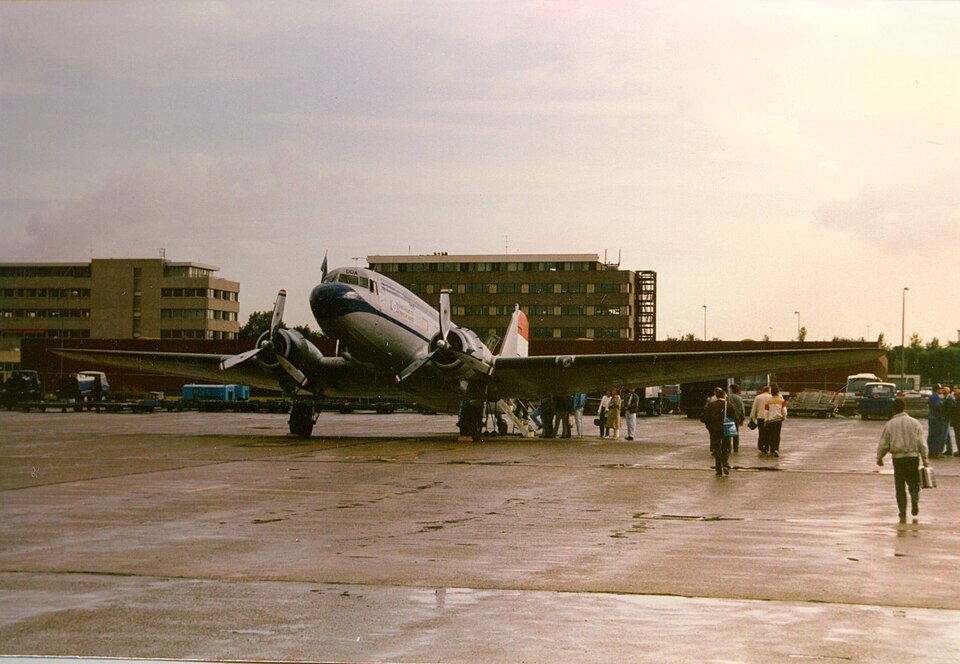
The aircraft, registration PH-DDA, departed Texel International Airport at 14:28 for the return flight to Amsterdam-Schiphol Airport. The airport manager had requested the crew to set transponder code 0060. Witnesses observed a normal takeoff. As the aircraft passed over the east coast of Texel, one witness reported a short-lived orange fire streak from the underside of the left engine, and another heard a shrieking noise from one engine. The weather over the Waddenzee included visibility of approximately 1.5 km in haze, no distinct horizon, an obscured sun, and a glassy smooth water surface with no references.
Emergency Communication and Radar
At about 14:33, the crew reported engine problems to Texel Radio and were advised to switch to De Kooy Approach. No radio telephony recordings were available for this phase. Naval Air Station De Kooy lacked primary radar; secondary radar showed the aircraft at 14:34:33 at 800 feet on a heading of 155° (gradually changing to 175°), squawking 0060, indicating the transponder had likely just been activated. At 14:35:32, the crew informed De Kooy Approach that they were at 600 feet, approaching De Kooy, and requested an emergency landing. The aircraft was approximately 11 nautical miles northeast of De Kooy. It then made a sudden left turn to heading 110° at 700 feet, and the crew reported feathered the left engine. De Kooy Approach instructed the crew to set transponder code 4321, provided QNH, and stated runway 22 was in use; the pilot did not respond. The instruction to squawk 4321 and proceed inbound was repeated. During these transmissions, the aircraft turned toward heading 225° at 500 feet, maintaining that heading while airspeed decreased. At 14:36:52, the pilot confirmed squawking 4321 and requested a heading, but radio communication was hampered by a whistle tone. De Kooy Approach asked for the position; the pilot reported 11 nm northeast. Seven seconds later, radar contact was confirmed and a heading of 240° was advised. Meanwhile, the aircraft had turned left to heading 180°, still at 500 feet with decreasing airspeed. The crew acknowledged the advised heading but did not turn.
Final Moments and Crash
The last radio message from the aircraft was received at this time. Radar showed the aircraft beginning a left turn at an increasing rate at 14:37:28. The final radar echo, at 14:37:47, indicated an altitude of 200 feet. The aircraft then disappeared from the radar screen; repeated calls from De Kooy Approach went unanswered, prompting the controller to declare an emergency. The aircraft crashed onto a flooded sand bank in the Waddenzee, where water depth was about 1.2 meters. Forty seconds after the radar loss, the controller contacted a KLM ERA helicopter approaching De Kooy, requesting a search. About seven minutes later, the helicopter reported sighting the wreckage. Rescue operations began; one passenger, severely injured, was taken to a hospital by a Naval helicopter but died that evening. The other 31 occupants to all probability died instantaneously in the crash. No fire occurred.
Probable Cause
The accident was initiated by a combined failure of the left engine and the left feathering system. The accident became inevitable when the flight crew allowed the speed to decrease below stall speed and lost control of the aircraft at an altitude from which recovery was not possible. The following contributing factors were reported: - Serious degradation of controllability and performance. - A high work load imposed on the flight crew by the multiple failure, further increased by unfavourable flight conditions and a suboptimal cockpit lay-out. - The inadequate level of skill and experience of the flight crew on the DC-3 to be able to cope with this specific emergency situation.