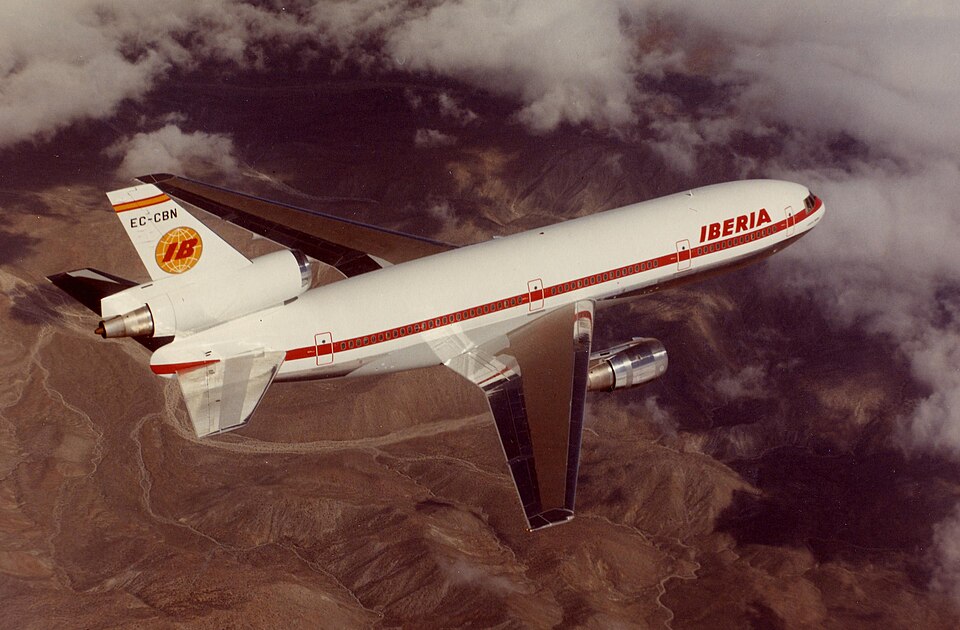
Accident Details
During the approach to runway 33L at Boston-Logan Airport, the crew encountered marginal weather conditions including rain and fog, with visibility limited to three-quarters of a mile. While transitioning from instrument flight rules (IFR) to visual flight rules (VFR) on short final, the captain failed to recognize that the aircraft was losing altitude. The right main landing gear struck a dyke and was torn off. Subsequently, the aircraft struck the runway surface, veered to the right, lost its undercarriage, and came to rest in flames.
Evacuation and Injuries
All 168 occupants were evacuated from the aircraft. Six occupants sustained injuries. The aircraft was destroyed by the impact and subsequent fire.
Probable Cause
The official investigation identified the probable cause as the captain's failure to recognize, and potential inability to recognize, an increased rate of descent in time to arrest it before the aircraft struck the approach light piers. The increased rate of descent was induced by an encounter with low-level wind shear at a critical point during the landing approach, where the captain was transitioning from automatic flight control under instrument conditions to manual flight control with visual references. The captain's ability to detect and arrest the increased rate of descent was adversely affected by a lack of information regarding the wind shear and the marginal visual cues available. Additionally, the minimal DC-10 wheel clearance above the approach lights and the runway threshold provided by the ILS glide slope made the response time critical, creating a situation where a pilot's ability to execute a safe landing was greatly diminished.