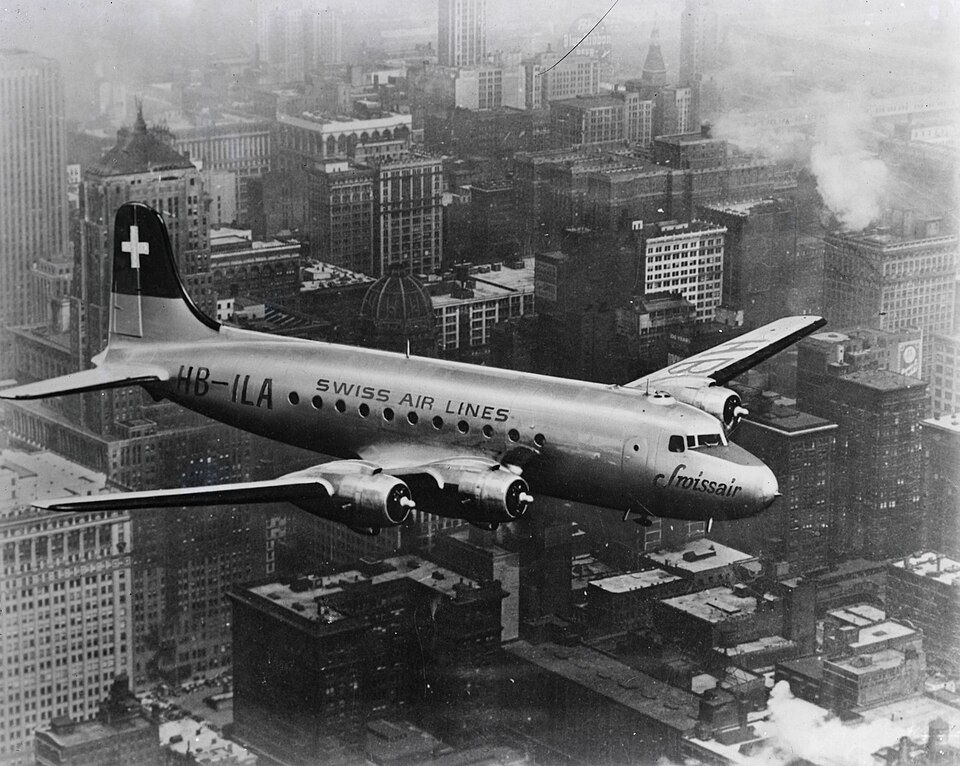
Accident Overview
An aircraft operating a positioning flight from Geneva to Mecca, with intermediate stops at Dakar, Niamey, and Khartoum, crashed into a mountainside in the Djebel Marra range in Sudan. The aircraft was carrying a crew of ten and two Swiss journalists. While overflying Sudan at night at an altitude of 8,000 feet, the airplane struck the slope of a mountain. Wreckage was located a few hours later. The aircraft was destroyed, and all 12 occupants were killed.
Investigation Findings
The official investigation determined that the accident resulted from a combination of several factors. The aircraft was progressing at an average ground speed of at least 200–205 knots, whereas the crew believed they were proceeding at no more than 175–178 knots as estimated before takeoff. Additionally, a slight directional difference of 2 or 3 degrees may have existed between the calculated track and the actual flight path.
These navigation inaccuracies accumulated over the 2.5-hour flight, leading to a position error of about 70 nautical miles to the west and about 30 nautical miles to the south. For reasons unknown to the investigating board, the position report given for 1906Z—apparently based on an astronomical fix—was inaccurate. As a result, the crew was unaware of the discrepancies between their dead-reckoning position and their actual position.
The aircraft, flying at 8,000 feet, hit a slope of the Djebel Marra mountains four minutes before the crew expected to be overhead the El Fasher beacon, where they would have begun a climb to 12,000 feet. At that time, the crew believed the aircraft was still more than 60 nautical miles away from these mountains.