No fatalities

1970-12-20: Douglas DC-6 (OO-CTL) — Sobelair — Málaga, Spain

Málaga, SpainLanding (descent or approach)

On December 20, 1970, a Douglas DC-6 (registration OO-CTL) operated by Sobelair was involved in an aviation accident near Málaga, Spain during landing or approach. No fatalities were reported. Investigators recorded the probable cause as: The hydraulics failure was caused by an attachment securing the recovery spring cable to the lower end of the leg broke during retraction of the gear. This summary draws on records from the Bureau of Aircraft Accidents Archives (B3A); 3 related events involving the same aircraft type or operator are linked below.

Sourcesthe Bureau of Aircraft Accidents Archives (B3A)Primary reportUpdated 1781235649Data APIEditorial standards
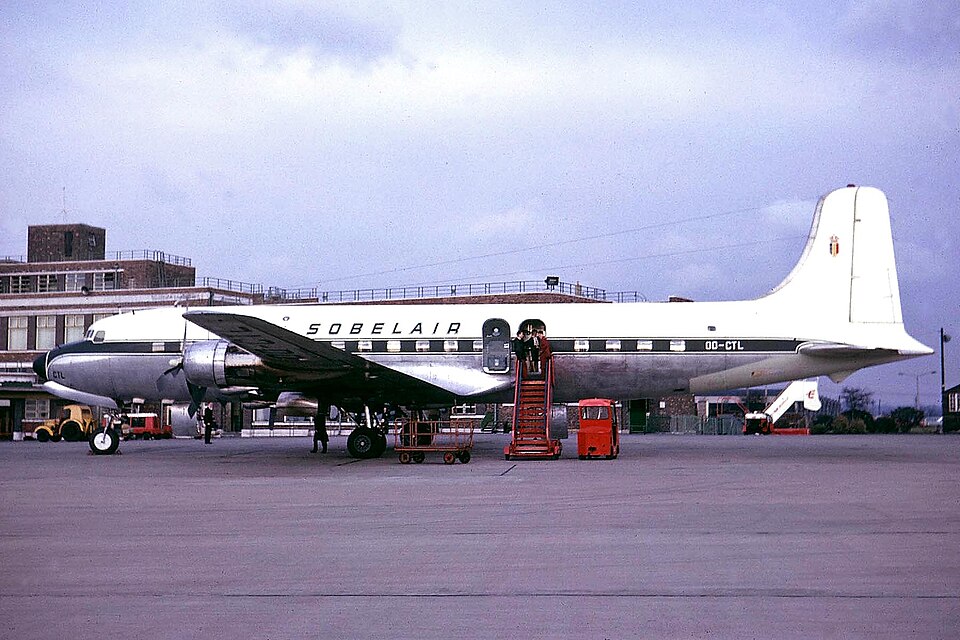
Aircraft registered OO-CTL
Aircraft registered OO-CTL. Photo: Ken Fielding / CC BY-SA 3.0, via Wikimedia Commons

A cargo flight returning to Málaga Airport following takeoff experienced a left main landing gear failure. The aircraft veered left on landing and came to rest in a grassy area. All seven crew members were uninjured but the aircraft was damaged beyond repair.

Incident

Shortly after departing from Málaga Airport on a cargo flight, the crew encountered technical problems. They were cleared to return to the airport and executed a safe landing. During the final approach, air traffic control informed the pilot that the left main landing gear was not extended.

Landing

Upon touchdown, the aircraft veered to the left and came to a stop in a grassy area adjacent to the runway. All seven crew members on board were uninjured.

Damage

The aircraft sustained damage beyond economical repair as a result of the landing gear failure and subsequent veer-off.

Probable Cause

The investigation determined that the hydraulics failure was caused by an attachment securing the recovery spring cable to the lower end of the leg broke during retraction of the gear. The loose spring was caught between the hydraulic cylinder and other linkages, and the piston was pushed to one side of the cylinder, causing an escape of hydraulic fluid.