Accident Overview
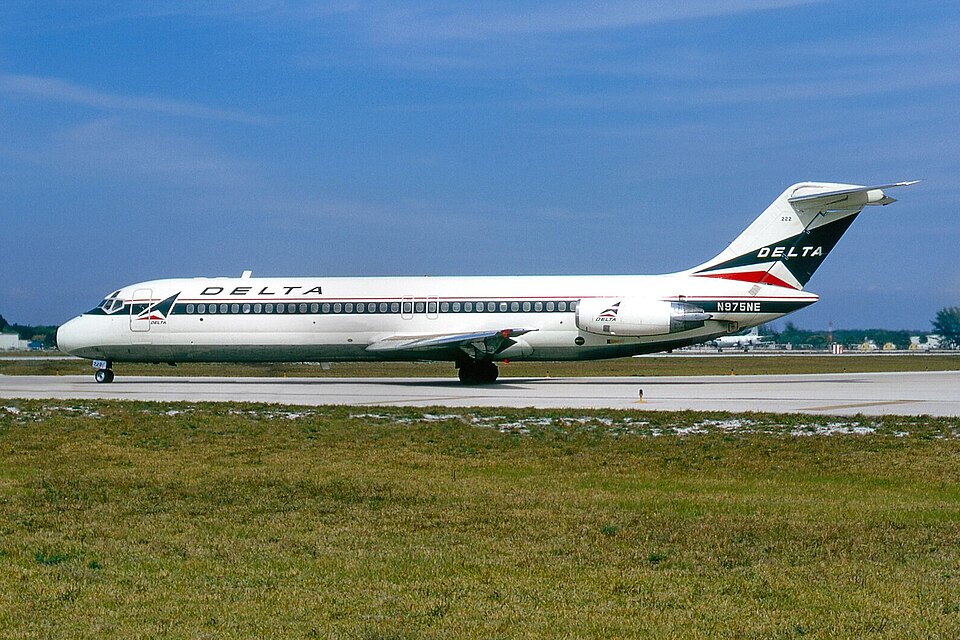
Delta Flight 723, a McDonnell Douglas DC-9, crashed during approach when it struck a seawall 3000 feet short and 150 feet to the right of runway 04R, subsequently breaking apart and catching fire. The approach was conducted in low-visibility conditions with reported runway visual range (RVR) of 500 meters and a 60-meter overcast ceiling. Two passengers initially survived the impact; one died the following day, and the second succumbed to injuries on December 11, 1973.
Approach and Crash
During the descent, the controller delayed issuing the approach clearance due to preoccupation with a potential conflict between two other aircraft. This delay resulted in poor positioning of the aircraft for the approach. When the flight passed the outer marker, its speed was 385 km/h, which was 80 km/h above the target speed, and it was 60 meters above the glide slope.
The flight director system was inadvertently operating in 'go-around mode', leading to abnormal instrument indications and confusion among the crew. The first officer, who was flying the aircraft, became preoccupied with resolving the instrument anomaly. The DC-9 continued descending and ultimately struck the seawall, crashed, and caught fire.
Official Findings
The probable cause was determined to be the flight crew's failure to monitor altitude and to recognize passage through the approach decision height during an unstabilized precision approach in rapidly changing meteorological conditions. The unstabilized approach was initially caused by passing the outer marker above the glide slope at excessive airspeed, compounded by the crew's preoccupation with questionable information from the flight director system. Additionally, poor positioning for the approach was partly due to nonstandard air traffic control services.