Paraglider Crash in Puente Alto Injures Pilot and Passenger
A SkyWalk Join't 3 paraglider crashed into the ground near Las Vizcachas, Chile, on September 1, 2024. The pilot and passenger sustained serious spinal…
On June 6, 1971, a Douglas DC-9 (registration N9345) operated by Hughes Air West was involved in an aviation accident near Duarte, United States of America in flight. 49 people were killed. Investigators recorded the probable cause as: The failure of both crews to see and avoid each other, though they had only marginal capability to detect, assess, and avoid the collision. This summary draws on records from the Bureau of Aircraft Accidents Archives (B3A).
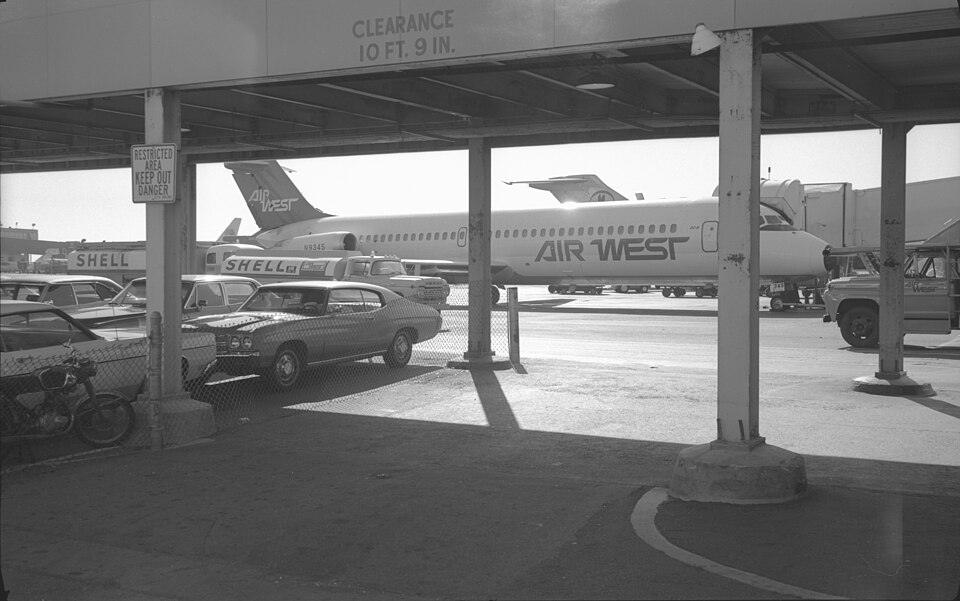
An Airwest DC-9 and a U.S. Marine Corps F-4B collided at 15,150 feet after the fighter performed a 360-degree aileron roll. The RIO ejected safely, while the other F-4 crewmember did not survive.
The failure of both crews to see and avoid each other, though they had only marginal capability to detect, assess, and avoid the collision. Other causal factors include a very high closure rate, comingling of IFR and VFR traffic in an area where the limitation of the ATC system precludes effective separation of such traffic, and failure of the crew of 151458 to request radar advisory service, particularly considering the fact that they had an inoperable transponder.
A SkyWalk Join't 3 paraglider crashed into the ground near Las Vizcachas, Chile, on September 1, 2024. The pilot and passenger sustained serious spinal…
A Cessna 172N struck electrical cables while on final approach to land at Aucó Aerodrome in Chile. The pilot was uninjured, but the aircraft sustained damage…
A Bombardier DHC-8-402 suffered a tail strike during landing at Puerto Williams on September 9, 2024. All 76 occupants were unharmed, but the aircraft…
A MYD JS-MD 3 glider veered off the runway and struck a wall at Vitacura Aerodrome on January 6, 2025. The pilot was uninjured, but the aircraft sustained…
A recreational paraglider flight in Puchuncaví, Chile, ended with the pilot sustaining serious injuries after a rapid descent and impact with a hillside on…
A Tecnam P2006T landed on its belly at an aerodrome in Poland after the crew failed to confirm landing gear deployment. The incident resulted in no injuries…