Flight History
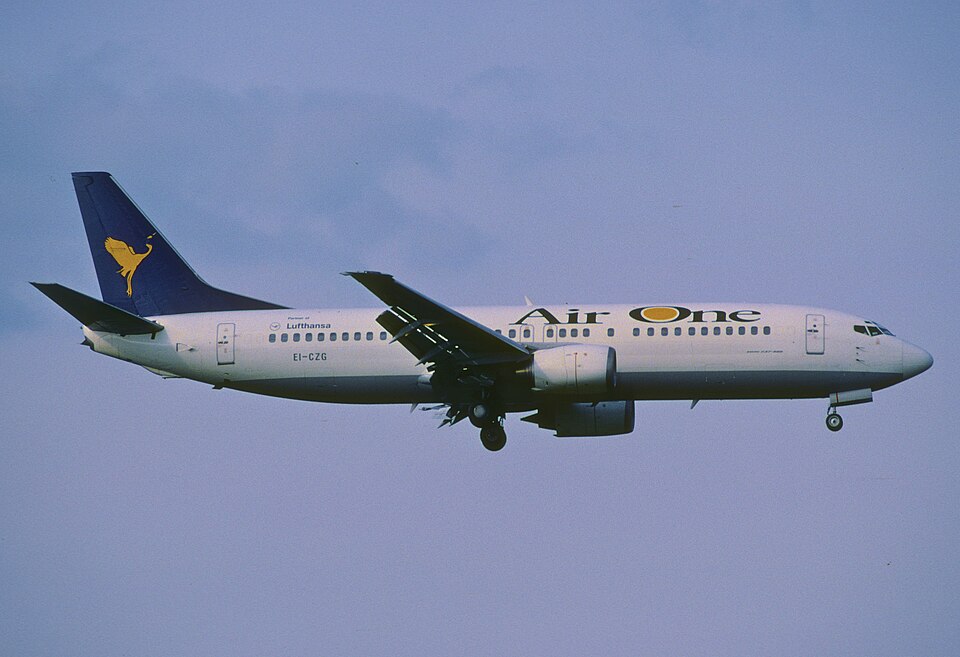
On 17 February 2007, at approximately 09:15 UTC, a Boeing 737-400, registration EI-CZG, operating flight AP 5500 from Rome Fiumicino to Alghero Fertilia, was second in the approach sequence. The commander was the pilot flying, and the copilot was pilot not flying. The preceding traffic, another B737 of the same company (flight AP 5510 from Milan Linate), was a few miles ahead.
The air traffic controller authorized the first aircraft to proceed along airway UM 858 and then to runway 20. For EI-CZG, the controller cleared it to proceed to MOROB point for a standard approach. At 09:13:46, the crew of EI-CZG requested a visual approach for runway 02, stating, "We are near MOROB, after MOROB we will proceed to ALG beacon then if possible for 02." The controller asked if they wanted a procedure or visual approach, and the crew replied "Visual." The controller authorized the visual approach but reminded them that for runway 02, after landing they would need to backtrack to the runway threshold due to closed taxiways (NOTAM N0464).
At 09:18, flight AP 5510 landed on runway 20 and vacated via taxiway C. At that time, flight AP 5500 was 20 nautical miles from the field at about 7,000 feet. The pilot continued the visual approach, positioning for a wide downwind leg.
The final turn was executed with a trajectory significantly misaligned with the runway heading (024°). To correct, the pilot applied an estimated 30° bank at an altitude of about 32 feet. During this maneuver, the right wingtip contacted the runway surface.
Damage
Contact caused compression damage to the right wingtip, including the logo light cover and slight abrasion to the right slat. The aircraft landed without further incident, rolled to the end of runway 02, backtracked, then taxied via runway 20 to taxiway C and reached parking position 5.
Crew and Passenger Awareness
Neither crew member reported awareness of the contact. Some passengers expressed dissatisfaction with the maneuver to flight attendants after deplaning.
Maintenance
A technician performing transit operations reported that the commander stated no anomalies were detected during the flight and that sufficient fuel was onboard for the next flight to Milan. Company procedures required only routine checks.