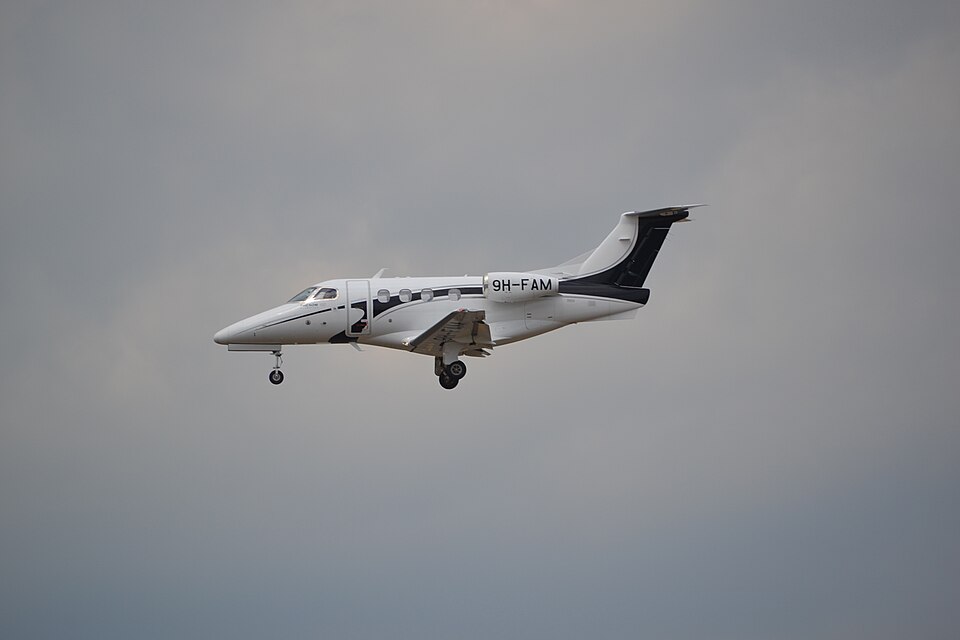
Flight Summary
A commercial passenger flight operated by a captain and a co-pilot departed Venice, Italy, at 08:17 bound for Le Bourget, France, with one passenger on board. The co-pilot was the pilot flying for this leg. During the flight, the crew discussed the weather forecast at Le Bourget, including the possibility of snow and runway contamination. They tested the aircraft's anti-icing system and verified it was functioning. Between 09:16 and 09:20, they calculated approach speeds using the Flight Manual, selecting 97 kt for VRef, 102 kt for VAC, and 121 kt for VFS—values appropriate for non-icing conditions.
At 09:20, while at flight level 340, the crew listened to the Le Bourget ATIS, which reported severe icing between 3,000 and 5,000 feet. The captain commented that snow was not expected, but icing was common. They briefed for an ILS approach to runway 27 with flaps in the FULL configuration and the autopilot engaged.
Approach and De-icing Actions
At 09:50, the crew was cleared by Paris-Charles de Gaulle approach to descend to 5,000 feet. Engine anti-ice and windshield demisting systems were activated. They were subsequently cleared to 3,000 feet and for the ILS 27 approach. At 3,000 feet, the aircraft intercepted the localizer signal approximately 14 nautical miles from Le Bourget. The captain activated the wing and stabilizer de-ice system (WINGSTAB) and reported seeing ice breaking up. The co-pilot also observed a small piece detach. The de-ice system was deactivated after 21 seconds.
At 09:58, the aircraft intercepted the glideslope at about 8.5 nautical miles. The tower controller cleared them to land, reporting wind from 350° at 4 knots. At 10:00, at 3.8 nautical miles, the aircraft was at 1,380 feet QNH with a descent rate of -360 ft/min and an indicated airspeed of 135 kt. Flaps were FULL and landing gear extended. The crew completed the before-landing checklist. The captain deactivated engine anti-ice, noting that the temperature was 0°C and it could remain on. He confirmed sight of the runway.
Stall and Hard Landing
At 468 feet QNH and 100 kt, the approach was stabilized and the autopilot disengaged. At 10:01, just before reaching the decision height of 200 feet, the captain remarked that the aircraft was high on the approach slope. Five seconds after passing 50 feet radio altitude, the airspeed dropped from 94 to 90 kt, and the angle of attack increased from 10° to 28°. The aircraft experienced an abrupt sink with normal acceleration reaching -0.4 G, vertical speed increasing from -700 to -960 ft/min, and roll oscillations between 2° left and 10° right. The captain announced he was taking control and initiated a go-around. The "STALL STALL" aural warning activated. The aircraft stalled in very short final with a right bank of about 10° and struck the runway hard.
The flight data recorder and cockpit voice recorder stopped at impact. A fire ignited under the fuselage near the wing roots. The aircraft slid 1,050 meters before stopping on the left edge of runway 27. Airport firefighting services extinguished the fire, and all occupants evacuated unharmed.
Probable Cause
Before descent, the crew received ATIS information indicating severe icing between 3,000 and 5,000 feet. They conducted the approach using the manufacturer's normal procedure for non-icing conditions. The selected approach speed (Vref 97 kt) was 22 kt below the recommended speed for icing conditions and, according to the manufacturer, close to the stall speed in the presence of ice contamination. At 3,000 feet, the wing and stabilizer de-ice system was activated for one complete cycle (21 seconds). The crew visually observed ice breaking up and deactivated the system, not reactivating it. This decision was based solely on visual observation of the wing leading edges. Post-accident examination confirmed ice on the wing and stabilizer leading edges, indicating ice buildup during final approach. Two hypotheses were considered: either poor visibility prevented accurate assessment of contamination, or the crew observed ice but underestimated its consequences. Complying with the icing procedure would have made landing at Le Bourget impossible due to go-around climb limitations with one engine inoperative and insufficient landing distance. The crew acknowledged these limitations before takeoff. The chosen strategy was to land per non-icing procedures while ensuring no ice accumulation. Deactivating the de-ice system led to incomplete ice removal on the horizontal stabilizer, re-accumulation, and incorrect configuration of the stall warning protection system. Just before impact, the aircraft was at low speed and high angle-of-attack, prone to stall with ice contamination.