History of the Flight
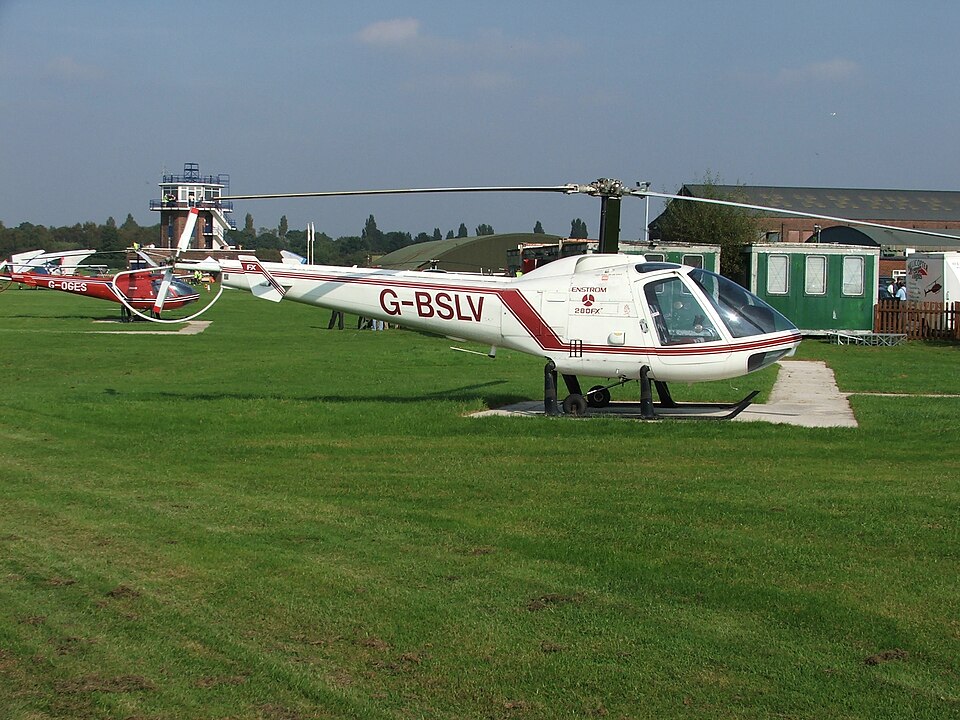
The pilot of the Enstrom 280FX, registration G-BSLV, had collected the helicopter from a maintenance organisation following completion of an Annual Check. As this was the first flight after the check, the pilot reported spending extra time on the pre-flight inspection. During the inspection, he noticed the throttle movement was stiff around the mid-travel position, but the stiffness was overcome with a little extra force, and the throttle then operated smoothly. Other pre-flight checks were satisfactory.
After starting the engine, the pilot hover-taxied the helicopter to the fuel pumps, and the helicopter responded normally. After refuelling, he started the engine again and took off with the intention of flying home. Approximately one minute later, at an altitude of 300 feet, the engine manifold pressure began to reduce. The pilot lowered the collective lever to reduce main rotor blade pitch and retain rotor speed. When it appeared level flight could not be maintained, he began looking for a suitable landing site. He chose a field and commenced autorotation, aiming for a flat area in the centre of the field. After a normal flare, the helicopter made a gentle touchdown with a short 'run-on' of about 6 feet.
Damage and Recovery
On shutting down the helicopter, an external inspection revealed that the tail rotor blades had been damaged on their leading edges. The damage was caused by contact with the thick-stemmed crop in the field, which was approximately knee-height. The helicopter was subsequently repaired on site by the maintenance organisation and flown back to their premises with no further problems. No injuries were reported.
Throttle System and Linkage Examination
The engine was a turbocharged Lycoming IO-360 variant. Wastegate control was effected by a link from the fuel servo, which moved in sympathy with the pilot's throttle. A demand for more power scheduled more fuel and also moved the wastegate towards the closed position via this link, increasing exhaust gas flow to drive the turbine and raising manifold pressure. The link was designed to be collapsible: a rod could slide within a tube but was held in a fixed relative position by a detent, which consisted of a spring-loaded plunger on the outer tube engaging with a groove on the inner rod. Should the wastegate become seized (particularly open), normal throttle use would remain available, though engine power would be limited. The helicopter Flight Manual stated that in the event of turbocharger or wastegate failure, the engine could still produce sufficient power for level flight.
Examination of the fuel servo-to-wastegate linkage revealed that the detent had 'broken out', causing the link to collapse. This explained the loss of engine power. The link was inspected and reset, but no fault could be found. Subsequently, the throttle linkage was functioned over its full travel but could not be made to break out again. The maintenance organisation stated it could not determine any reason why the detent should have broken out, but it would check whether the wastegate was free to function normally when the helicopter returned to service.